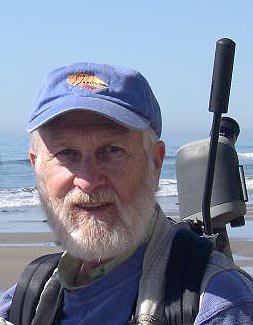
Many fly fishers like me, those of us who practice the art and discipline of catch-and-release fishing, often say, “Well, it’s not always about catching fish.” We usually say that on days when we’ve been skunked.
Then there are the days when we catch and release a lot of fish, yet never wet a line. I had one of those kinds of days this past week while chasing birds in the Los Padres National Forest in California.
Los Padres is one of the few places where you might catch a glimpse of the endangered California Condor. We didn’t. We were, however, feeling lucky; Susan, her sister and I. We had stopped to look over a particularly attractive scene (those two are both artists so every bend in the road harbors opportunity) and got great day-time looks of a Western Screech-owl, Acorn Woodpecker and a California Quail that popped up on a fencepost to see what the ruckus was all about and let us take its picture.
But that was birding and this is supposed to be about fishing. Late in the day we stopped at another picturesque spot where water was seeping across the road. In an area that has not seen rain in eight months, any wet spot attracts birds. This spot turned out to be a classic mountain trout stream. While Susan and Peg walked through the woods discussing angles and the quality of light, I stood behind a tree and watched the water. Sure enough, I saw movement. I pointed this out to them and we all enjoyed spotting fish in a stream so narrow you could step across it.
They moved on and I decided to fish for a while. It was a challenging spot: narrow water protected by branches. No casting here. Crystal clear water with bright sun casting shadows. There were spots where I might dangle a fly in, however, and let it drift …
They were rainbows. More than a dozen of them worked in the small stretch of stream I checked. Further down stream I found a couple more pools and could see fish working in them, too. To the untrained eye there were no fish. Then a movement so quick you’re unsure it even happened, made you pause. From behind a rock a small dark bullet moved to grab an unseen insect. They weren’t big fish, maybe a couple of 12-inchers in the lot. What they were feeding on remains a mystery. Bugs were hatching, occasionally, and the fish were feeding half way down in the water column, which in that spot was about three feet deep.
So, a really small nymph, a bead-head something maybe, unweighted, set adrift down either side of the stream might work. There was some undercutting of the banks and those tree roots would be a problem. That could be overcome if I kept the line just a bit to the right of that rock …
And by the time the two artists had finished painting their great landscapes, in their--minds--I had caught and released a dozen trout, in mine.
Sunday, March 11, 2007


Monday, February 19, 2007
Tunnel of Love
I thought the best way to celebrate President’s Day might be to watch birds at my feeder this morning. Actually, it’s the best way to celebrate the start of any day. Plenty of metaphorical things about birds, feeding at the public trough (to mix a metaphor) and cooperation among species, to go along with a day of celebration for politicians. We celebrate virtually everything and everyone in this country. Soon we’ll have a national holiday for NASCAR drivers. Only kids south of the Mason and Dixon line will get the day off from school, however.
But then, I digress. Back to feeding at the public trough. We’ve had a Red Squirrel terrorizing the birds at our feeder ever since fall. I was hoping this guy, and his new-found-friend, would hibernate and let the birds eat in peace. Not so.
I glanced up from the local snewspaper every so often and there he’d be, sucking up the free chow. And while he is kind of cute, he is still a freeloader, not unlike some poilticians. I realized that every now and again he was also in his favorite tree, yet there were no tracks in the snow. On closer inspection, I saw that he had burrowed a tunnel from the base of the tree to the base of the bird feeder. No clumping through 18 inches of snow for this guy. It was really cool: grab some seeds, zip through the tunnel and eat from a spot where he could warn away those winged interlopers.
As I finished the paper’s section on what passes for arts and entertainment in this area, I noticed that Red’s friend, Stumpy (because she has only half a tail) was examining the tree-end of the tunnel while Red was feeding his face at the other. At about the time Red turned to go back to his tree, stumpy headed into the tunnel to see where it led.
Midway in the diffused light of the tunnel an explosion of snow, squirrel fur and sunflower seeds erupted. A lot more chatter than I thought possible from two little animals could be heard inside the house.
There was a lot of grabbing, jumping and flashing of teeth before the pair settled on the deck railing to discuss what had happened. I noticed they were sitting closer than usual so I assume this close encounter of the furred kind was not all negative.
But then, I digress. Back to feeding at the public trough. We’ve had a Red Squirrel terrorizing the birds at our feeder ever since fall. I was hoping this guy, and his new-found-friend, would hibernate and let the birds eat in peace. Not so.
I glanced up from the local snewspaper every so often and there he’d be, sucking up the free chow. And while he is kind of cute, he is still a freeloader, not unlike some poilticians. I realized that every now and again he was also in his favorite tree, yet there were no tracks in the snow. On closer inspection, I saw that he had burrowed a tunnel from the base of the tree to the base of the bird feeder. No clumping through 18 inches of snow for this guy. It was really cool: grab some seeds, zip through the tunnel and eat from a spot where he could warn away those winged interlopers.
As I finished the paper’s section on what passes for arts and entertainment in this area, I noticed that Red’s friend, Stumpy (because she has only half a tail) was examining the tree-end of the tunnel while Red was feeding his face at the other. At about the time Red turned to go back to his tree, stumpy headed into the tunnel to see where it led.
Midway in the diffused light of the tunnel an explosion of snow, squirrel fur and sunflower seeds erupted. A lot more chatter than I thought possible from two little animals could be heard inside the house.
There was a lot of grabbing, jumping and flashing of teeth before the pair settled on the deck railing to discuss what had happened. I noticed they were sitting closer than usual so I assume this close encounter of the furred kind was not all negative.
Tuesday, February 06, 2007
Star Light, Moon Bright
Certainly one of the challenges of having astronomy as a hobby here in northeast Ohio is the weather. Winter skies are often clear—the more exciting for viewing. They can also be bitterly cold.
After plenty of warm, cloudy nights and a nearly planet-less November, then only limited action in December, amateur astronomers have to be ready for anything. The end of January and early February has seen the return of the Big Eight (and the planet formerly known as Pluto), along with some great moon sightings. And the outstanding winter constellations.
This morning was one of those really great opportunities for sky watching. Except for the facts that the temperature was three below zero—and I had to work my day job. Ug.
Heading toward the office an hour or so before sunrise, I could not help but stop along the way and just take in the spectacular scene. Much to the chagrin of a driver behind me (who must have been a banker or something, eager to get to the office and count his money), I pulled off the road opposite an open field. Often we watch Wild Turkeys, Red-tailed Hawks and White-tailed deer feeding there. This morning the field was a sea of shadows tossed haphazardly on the snow by the 18-day-old moon; lopsided and bright—like some people I know.
The view to the southwest showed me that Saturn was leading Luna down the ecliptic path as if he knew where he was going. A couple days earlier they had risen nearly hand-in-hard when she was full and he was in a slightly different orbit. Behind her, off to the southeast, Jupiter, trailed by the warrior Mars, flashed brighter than the traffic helicopter heading off to the morning’s first road disaster. Jupiter’s solid, steady light was a bright, cold blue, belying the plant’s warmer tones when seen through a telescope. I tried to imagine the positions of her four visible moons. Would the great red spot be visible this morning?
Bright Sirius was gone from my sky. I hungered for what the Orion cluster must look like in this clear sky and envied people in the west now looking up.
I read somewhere that the while the moon’s gravity is strong enough to pull oceans out of shape, it really doesn’t have any impact on humans. We’re too small, even though we are mostly water.
Bunk! The longer I stood there in the diminishing moonlight, looking up as more and more stars became visible to my widening pupils, the stronger I could feel Luna’s seductive pull, her whisper encouraging me to move in the opposite direction of my office.
After plenty of warm, cloudy nights and a nearly planet-less November, then only limited action in December, amateur astronomers have to be ready for anything. The end of January and early February has seen the return of the Big Eight (and the planet formerly known as Pluto), along with some great moon sightings. And the outstanding winter constellations.
This morning was one of those really great opportunities for sky watching. Except for the facts that the temperature was three below zero—and I had to work my day job. Ug.
Heading toward the office an hour or so before sunrise, I could not help but stop along the way and just take in the spectacular scene. Much to the chagrin of a driver behind me (who must have been a banker or something, eager to get to the office and count his money), I pulled off the road opposite an open field. Often we watch Wild Turkeys, Red-tailed Hawks and White-tailed deer feeding there. This morning the field was a sea of shadows tossed haphazardly on the snow by the 18-day-old moon; lopsided and bright—like some people I know.
The view to the southwest showed me that Saturn was leading Luna down the ecliptic path as if he knew where he was going. A couple days earlier they had risen nearly hand-in-hard when she was full and he was in a slightly different orbit. Behind her, off to the southeast, Jupiter, trailed by the warrior Mars, flashed brighter than the traffic helicopter heading off to the morning’s first road disaster. Jupiter’s solid, steady light was a bright, cold blue, belying the plant’s warmer tones when seen through a telescope. I tried to imagine the positions of her four visible moons. Would the great red spot be visible this morning?
Bright Sirius was gone from my sky. I hungered for what the Orion cluster must look like in this clear sky and envied people in the west now looking up.
I read somewhere that the while the moon’s gravity is strong enough to pull oceans out of shape, it really doesn’t have any impact on humans. We’re too small, even though we are mostly water.
Bunk! The longer I stood there in the diminishing moonlight, looking up as more and more stars became visible to my widening pupils, the stronger I could feel Luna’s seductive pull, her whisper encouraging me to move in the opposite direction of my office.
Sunday, February 04, 2007
No Contest
As soon as I saw the competitors I knew how the contest was going to end. And it was not going to be pretty, either.
An American Goldfinch, in this corner, was calmly taking niger seed from the tube feeder. The single-digit temperatures did not seem to diminish its appetite, although there was no others of its kind in sight.
In that corner, about 10 feet away, perched Mr. Cooper’s Hawk. He, too, was looking for lunch and the goldfinch seemed to be his meal of choice.
When the goldfinch saw, or sensed, the presence of the hawk, it froze. The hawk, and I noodled this out by moving around inside the house to check his sight lines, was unsure if there was a bird on the feeder or not. The wind would ruffle the finch’s feathers and the hawk would perk up. The tube feeder, however, was swaying in the breeze, just enough to create a bit of uncertainty.
The goldfinch held its ground. No move is a good move in a situation like this. The standoff continued for several minutes. The hawk would occasionally turns its attention elsewhere until finally it launched itself from the branch and rocketed off in the direction of a flock of starlings.
Goldfinch wins!
An American Goldfinch, in this corner, was calmly taking niger seed from the tube feeder. The single-digit temperatures did not seem to diminish its appetite, although there was no others of its kind in sight.
In that corner, about 10 feet away, perched Mr. Cooper’s Hawk. He, too, was looking for lunch and the goldfinch seemed to be his meal of choice.
When the goldfinch saw, or sensed, the presence of the hawk, it froze. The hawk, and I noodled this out by moving around inside the house to check his sight lines, was unsure if there was a bird on the feeder or not. The wind would ruffle the finch’s feathers and the hawk would perk up. The tube feeder, however, was swaying in the breeze, just enough to create a bit of uncertainty.
The goldfinch held its ground. No move is a good move in a situation like this. The standoff continued for several minutes. The hawk would occasionally turns its attention elsewhere until finally it launched itself from the branch and rocketed off in the direction of a flock of starlings.
Goldfinch wins!
Monday, January 29, 2007
Winter Birding
Winter birding in northeast Ohio can be thrilling in terms of seeing species you’d otherwise have to travel to the Arctic to see. Or it can be so deadly dull you’re better off just looking out your front window. Most days fall somewhere in between.
This weekend was one of those strange, in between days. With friends Karin and Pat, Susan and I made our annual winter pilgrimage to Killdeer Plains Wildlife Management Area. We go there at this time of year to see the invasion of northern owl species, primarily, and other birds that can be seen at no other time or place—except the open tundra of Canada.
The fact that the trip also includes fabulous homemade soups, breads and desserts is not overlooked; maybe even an incentive.
An omen of what lay ahead was our spotting of a Turkey Vulture only a few miles east of Hinckley, Ohio. It is common knowledge that the Turkey Vultures are lured back to this region on March 15 each year with aromas rising from grilled sausages and pancakes. Some people have twisted that around to think the feast is to celebrate the birds’ return. Not true. In this case the tail wags the dog.
So there it was, January 27 and we bagged our first Turkey Vulture of the year. Not an Arctic bird, for sure. Things picked up as we neared Killdeer Plains and shunted off to the north to search the open farm fields. With the wind blowing up a wind chill factor off the charts we spotted hundreds of Horned Larks and Lapland Longspurs, true northern birds. Things were heating up. Longspurs are curious, sparrow-sized birds with short legs and an incredible array of shades of brown in their coloring. Their visiting our windswept barren corn fields is like us going to Florida for a break from the weather.
What had started as a slow birding day began to taper off about the time we entered Killdeer Plains. The large raptors we had hoped to see had yet to arrive. We were treated to an amazing display of affection by a pair of Bald Eagles. When these big birds get it on, they get it on! Right there on the ice with hundreds of Canada Geese watching.
We counted about 70 Tundra Swans on the open water of one of the area's larger lakes. Watching swans fly is an amazing sight. As they came in for a landing the birds would talk with each other, turn and feather their wings and stall in mid air, then drop softly into an open spot among their kind.
We had all but given up on spotting an owl this trip. Sometimes you get lucky and see five or six species of owls in one day. This was not one of those days. Making one last drive past ideal Short-eared Owl habitat in lighting so poor we were unsure, at first, what was moving to our left, we saw a Short-eared Owl rise from the ground and hover-hunt over the grassy pasture. We stopped the car in the middle of the road and jumped out (I think it was in that order) to get a better view. The pudgy 15-inch body and 38-inch wings make this bird an unlikely candidate for graceful flight. It’s flight pattern is often described as moth-like. We watched this animal, no more than 30 feet away, rise and fall in the wind; diving at what it hoped would be dinner. It turned and pirouetted on its wingtips, paying no attention to us. I was reminded of the admonition, dance like no one is watching. As it moved ahead it barked to its neighbors whom we could not see. Suddenly there were a half dozen owls rising from the ground, moving in all directions.
As the owls' barking faded into the night we forgot we had seen only 33 other species this day. It will always be remembered as another great winter birding day in northern Ohio.
This weekend was one of those strange, in between days. With friends Karin and Pat, Susan and I made our annual winter pilgrimage to Killdeer Plains Wildlife Management Area. We go there at this time of year to see the invasion of northern owl species, primarily, and other birds that can be seen at no other time or place—except the open tundra of Canada.
The fact that the trip also includes fabulous homemade soups, breads and desserts is not overlooked; maybe even an incentive.
An omen of what lay ahead was our spotting of a Turkey Vulture only a few miles east of Hinckley, Ohio. It is common knowledge that the Turkey Vultures are lured back to this region on March 15 each year with aromas rising from grilled sausages and pancakes. Some people have twisted that around to think the feast is to celebrate the birds’ return. Not true. In this case the tail wags the dog.
So there it was, January 27 and we bagged our first Turkey Vulture of the year. Not an Arctic bird, for sure. Things picked up as we neared Killdeer Plains and shunted off to the north to search the open farm fields. With the wind blowing up a wind chill factor off the charts we spotted hundreds of Horned Larks and Lapland Longspurs, true northern birds. Things were heating up. Longspurs are curious, sparrow-sized birds with short legs and an incredible array of shades of brown in their coloring. Their visiting our windswept barren corn fields is like us going to Florida for a break from the weather.
What had started as a slow birding day began to taper off about the time we entered Killdeer Plains. The large raptors we had hoped to see had yet to arrive. We were treated to an amazing display of affection by a pair of Bald Eagles. When these big birds get it on, they get it on! Right there on the ice with hundreds of Canada Geese watching.
We counted about 70 Tundra Swans on the open water of one of the area's larger lakes. Watching swans fly is an amazing sight. As they came in for a landing the birds would talk with each other, turn and feather their wings and stall in mid air, then drop softly into an open spot among their kind.
We had all but given up on spotting an owl this trip. Sometimes you get lucky and see five or six species of owls in one day. This was not one of those days. Making one last drive past ideal Short-eared Owl habitat in lighting so poor we were unsure, at first, what was moving to our left, we saw a Short-eared Owl rise from the ground and hover-hunt over the grassy pasture. We stopped the car in the middle of the road and jumped out (I think it was in that order) to get a better view. The pudgy 15-inch body and 38-inch wings make this bird an unlikely candidate for graceful flight. It’s flight pattern is often described as moth-like. We watched this animal, no more than 30 feet away, rise and fall in the wind; diving at what it hoped would be dinner. It turned and pirouetted on its wingtips, paying no attention to us. I was reminded of the admonition, dance like no one is watching. As it moved ahead it barked to its neighbors whom we could not see. Suddenly there were a half dozen owls rising from the ground, moving in all directions.
As the owls' barking faded into the night we forgot we had seen only 33 other species this day. It will always be remembered as another great winter birding day in northern Ohio.
Wednesday, January 24, 2007
Blowin’ in the Wind Part II
Last May I wrote, with great exuberance, about the fancy new wind turbine on Cleveland’s lakefront, pumping megawatts of power into the Great Lakes Science Center. I’ve had a remote connection to some folks monitoring the site for dead birds and the reports, albeit secondhand, have all been positive. No birds have been whacked by the props.
Then last night I heard Mark Shieldcastle speak. Mark is a wildlife biologist with the Crane Creek Wildlife Research Station out near Ottawa National Wildlife Refuge. By the end of Mark’s hour-long presentation, me, and a lot of the other left-leaning tree huggers were having second, maybe third thoughts about wind generated electricity.
Wind turbines, touted as a green alternative, ain’t so green it seems. First, they’re notoriously inefficient. Their efficiency rating is about 15%. Nuclear power is about 85%. And they’re not so animal friendly, either. Had I thought through the scenario, I might have figured out why people are not finding dead birds at the base of the wind turbines in this area. The example Mark used was a Golden-crowned Kinglet weighing five-grams, traveling 10 mph. In the dark it meets a turbine prop traveling at 150 mph. The area enclosed by the circumference of those spinning blades equals about four acres! How much of that bird would be left and in what direction should we look? Oh.
The proposal that is giving people sweaty palms here in Cleveland is the installation of turbines out in the lake. Listen closely and you can hear peoples’ lips smacking. As Mark points out, if we can’t find dead birds on land, what chance would we have of finding them in the lake?
This area of the planet is critical to bird migration. It’s one of the best spots anywhere for warbler migration in spring. It’s about the only spot on Earth where the endangered Kirtland’s Warbler has been seen off its breeding grounds in Michigan. And while birds often fly higher than the 400-foot-high or 600-foot-high towers that are proposed, they to land and take off with frequency in the lake and around the lake shore.
Information on bird strikes against wind turbine blades is minimal at best. Altamont, California, has some good data because the turbines there are killing hundreds of large raptors with frightening regularity. A mystery killing by wind turbines is happening to bat species, says Mark. Thousands of bats are being killed by the wind farm project in the Appalachians of West Virginia. For some unknown reason, bats are attracted to the spinning blades. They’ve also found dead bats at the site of Ohio’s only wind farm, in Bowling Green.
A recent article in the Cleveland Plain Dealer quotes Amy Gomberg, environmental advocate for Environment Ohio in Columbus, as saying, “I don’t believe wind developers would put up wind turbines where they would have a negative impact on birds. It would make them look bad.”
Oh, my. Wake up! Big Wind is lining up at the government trough just like Big Oil, Big Guns and Big Auto have done for years. Without more solid science regarding the impact of wind turbines on wildlife, Big Wind is going to create a giant sucking sound heard throughout northeast Ohio and wherever else it can site its wind farms. And only when pigs fly, and get sliced up in the turbine blades, will they care about looking bad.
Then last night I heard Mark Shieldcastle speak. Mark is a wildlife biologist with the Crane Creek Wildlife Research Station out near Ottawa National Wildlife Refuge. By the end of Mark’s hour-long presentation, me, and a lot of the other left-leaning tree huggers were having second, maybe third thoughts about wind generated electricity.
Wind turbines, touted as a green alternative, ain’t so green it seems. First, they’re notoriously inefficient. Their efficiency rating is about 15%. Nuclear power is about 85%. And they’re not so animal friendly, either. Had I thought through the scenario, I might have figured out why people are not finding dead birds at the base of the wind turbines in this area. The example Mark used was a Golden-crowned Kinglet weighing five-grams, traveling 10 mph. In the dark it meets a turbine prop traveling at 150 mph. The area enclosed by the circumference of those spinning blades equals about four acres! How much of that bird would be left and in what direction should we look? Oh.
The proposal that is giving people sweaty palms here in Cleveland is the installation of turbines out in the lake. Listen closely and you can hear peoples’ lips smacking. As Mark points out, if we can’t find dead birds on land, what chance would we have of finding them in the lake?
This area of the planet is critical to bird migration. It’s one of the best spots anywhere for warbler migration in spring. It’s about the only spot on Earth where the endangered Kirtland’s Warbler has been seen off its breeding grounds in Michigan. And while birds often fly higher than the 400-foot-high or 600-foot-high towers that are proposed, they to land and take off with frequency in the lake and around the lake shore.
Information on bird strikes against wind turbine blades is minimal at best. Altamont, California, has some good data because the turbines there are killing hundreds of large raptors with frightening regularity. A mystery killing by wind turbines is happening to bat species, says Mark. Thousands of bats are being killed by the wind farm project in the Appalachians of West Virginia. For some unknown reason, bats are attracted to the spinning blades. They’ve also found dead bats at the site of Ohio’s only wind farm, in Bowling Green.
A recent article in the Cleveland Plain Dealer quotes Amy Gomberg, environmental advocate for Environment Ohio in Columbus, as saying, “I don’t believe wind developers would put up wind turbines where they would have a negative impact on birds. It would make them look bad.”
Oh, my. Wake up! Big Wind is lining up at the government trough just like Big Oil, Big Guns and Big Auto have done for years. Without more solid science regarding the impact of wind turbines on wildlife, Big Wind is going to create a giant sucking sound heard throughout northeast Ohio and wherever else it can site its wind farms. And only when pigs fly, and get sliced up in the turbine blades, will they care about looking bad.
Saturday, January 20, 2007
Patience is a Virtue
Sometimes it’s easy to unwittingly step briskly on the path toward disaster. At other times it’s a more casual stroll. As with most unpleasant experiences, this potential disaster had its humorous side. Whether it was humorous, of course, depends on your state of mind at the time, and whether you had committed the error.
The lines at the Southwest Airlines ticket counter in Chicago, the other day, were so long it was hard to imagine the airline had enough planes in its fleet to handle all of these would-be passengers. Slowly we crept along, like cattle moving to slaughter; or skiers moving to the lift chairs, similar experiences for some.
An apparent supervisor was doing her best to direct people. Those with only luggage to check, go right. No, my right, your left. No luggage to check? Go left. No, my left, your right. And those who weren’t sure if they were even supposed to be at the airport, wait over there. A thankless and endless job. She managed a relatively cheerful smile throughout the chore while making drastic pleas for help on her walkie-talkie.
Help arrived in the form of a breathless young man who had the expression of a deer caught in the headlights. The supervisor, while dealing with irate passengers, directed the young man to rearrange the black coral belts that kept us in our lanes as we moved laboriously toward the frenzied people at the ticket counter. She gave him instructions without making eye contact. He looked at her as if she were speaking a language he was hearing for the first time. Eventually, she got to the end of her sentence. The guy was so confused he had ask her, again, what he was supposed to do.
Finally he got it and moved to action. Bobbing and weaving, ducking beneath the lines that held us all in check, the young fellow worked his way into the middle of the mess. His goal, I think, was to create two major streams feeding toward the ticket counters. He began retracting this strap and extending that one. He compartmentalized, expanded, eliminated and created with the speed of a man on a mission from god.
People stopped moving forward, turned left or right depending where he had established inlet or outlet. What had been only confusion now degenerated into chaos.
In less than three minutes this whirling dervish managed to bottle up the whole lot of us. It was soon apparent that no one could get to the ticket counters.
The supervisor, meanwhile, had kept her back to the action. She soon realized that the line was getting longer, not shorter as she had hoped. And what had been only a murmmer of conversation coming from the passengers, was now reaching a decibel level that might concern even OSHA. As the hapless young man created the last barrier he was confused beyond hope. He stood still, hands in his packets, looking hopefully in the direction of the supervisor.
Mob-rule began to take over. People nearest the connectors of the retracting barrier straps began unhooking them and move in the general direction of the ticket counters. Before long, passengers had reestablished straight lines and the maze created by the young fellow was a matter of jokes. Order emerged from chaos. To the supervisor’s credit, I noticed she was quietly explaining to the young man, this time using hand gestures and getting affirmative nods from him, how to establish a corral, not a maze.
The lines at the Southwest Airlines ticket counter in Chicago, the other day, were so long it was hard to imagine the airline had enough planes in its fleet to handle all of these would-be passengers. Slowly we crept along, like cattle moving to slaughter; or skiers moving to the lift chairs, similar experiences for some.
An apparent supervisor was doing her best to direct people. Those with only luggage to check, go right. No, my right, your left. No luggage to check? Go left. No, my left, your right. And those who weren’t sure if they were even supposed to be at the airport, wait over there. A thankless and endless job. She managed a relatively cheerful smile throughout the chore while making drastic pleas for help on her walkie-talkie.
Help arrived in the form of a breathless young man who had the expression of a deer caught in the headlights. The supervisor, while dealing with irate passengers, directed the young man to rearrange the black coral belts that kept us in our lanes as we moved laboriously toward the frenzied people at the ticket counter. She gave him instructions without making eye contact. He looked at her as if she were speaking a language he was hearing for the first time. Eventually, she got to the end of her sentence. The guy was so confused he had ask her, again, what he was supposed to do.
Finally he got it and moved to action. Bobbing and weaving, ducking beneath the lines that held us all in check, the young fellow worked his way into the middle of the mess. His goal, I think, was to create two major streams feeding toward the ticket counters. He began retracting this strap and extending that one. He compartmentalized, expanded, eliminated and created with the speed of a man on a mission from god.
People stopped moving forward, turned left or right depending where he had established inlet or outlet. What had been only confusion now degenerated into chaos.
In less than three minutes this whirling dervish managed to bottle up the whole lot of us. It was soon apparent that no one could get to the ticket counters.
The supervisor, meanwhile, had kept her back to the action. She soon realized that the line was getting longer, not shorter as she had hoped. And what had been only a murmmer of conversation coming from the passengers, was now reaching a decibel level that might concern even OSHA. As the hapless young man created the last barrier he was confused beyond hope. He stood still, hands in his packets, looking hopefully in the direction of the supervisor.
Mob-rule began to take over. People nearest the connectors of the retracting barrier straps began unhooking them and move in the general direction of the ticket counters. Before long, passengers had reestablished straight lines and the maze created by the young fellow was a matter of jokes. Order emerged from chaos. To the supervisor’s credit, I noticed she was quietly explaining to the young man, this time using hand gestures and getting affirmative nods from him, how to establish a corral, not a maze.
Thursday, January 18, 2007
Watch Your Back
Bird watching is about more than watching birds. It’s about observing bird behavior as well. And of all the bird behaviors we could list, sex and eating are two activities at the top of every birder’s list.
This is about eating. I was driving north on MLK Boulevard in Cleveland this morning and some motion off to my left caught my eye. A Red-tail Hawk was cruising along next to me, about door-handle level, 25 feet away. I was going about 30 mph and this guy was keeping pace. Not even puffing as far as I could tell. He was focused on a huge flock of plump American Robins feeding in an open spot, surrounded by some sort of berry-bearing tree. The robins were flanked by Fox Squirrels, also enjoying the fruit treat.
I slowed as I saw the hawk put down its landing gear, talons wide open. A fraction of a second before it could nab an orange-breasted morsel, the flock exploded in all directions!
The huge bird banked sharply to its right and clamped down on one of the fuzzy spectators that had been up on its haunches like it was watching a sporting event. Full power climb, squirrel wiggling (and probably screeching) without missing a beat, the hawk headed off to brunch.
I replayed the event in my mind on my way in to the office (more fun than thinking about what would try to eat me when I got there) and have come to the conclusion that the squirrel was the number-one target. The faint toward the robins was all part of the plan. Cool move.
This is about eating. I was driving north on MLK Boulevard in Cleveland this morning and some motion off to my left caught my eye. A Red-tail Hawk was cruising along next to me, about door-handle level, 25 feet away. I was going about 30 mph and this guy was keeping pace. Not even puffing as far as I could tell. He was focused on a huge flock of plump American Robins feeding in an open spot, surrounded by some sort of berry-bearing tree. The robins were flanked by Fox Squirrels, also enjoying the fruit treat.
I slowed as I saw the hawk put down its landing gear, talons wide open. A fraction of a second before it could nab an orange-breasted morsel, the flock exploded in all directions!
The huge bird banked sharply to its right and clamped down on one of the fuzzy spectators that had been up on its haunches like it was watching a sporting event. Full power climb, squirrel wiggling (and probably screeching) without missing a beat, the hawk headed off to brunch.
I replayed the event in my mind on my way in to the office (more fun than thinking about what would try to eat me when I got there) and have come to the conclusion that the squirrel was the number-one target. The faint toward the robins was all part of the plan. Cool move.
Thursday, January 04, 2007
So, Where Are the Birds?
While our compilers digest the numbers from the Annual Audubon Christmas Count, we can all ponder the fate of birds this winter. At our Audubon chapter’s chili dinner I spoke with some of the other territory leaders and everyone seemed to have the same question: Where were the birds, today? Weather was mild, by count-day standards. No snow. Birds could scatter and find plenty of natural food.
And there’s another reason why birds were missing, at least in my area, which includes Waterworks Park in Cuyahoga Falls, Ohio. One of my ace counters found a spot in the park where wrong-headed, misguided individuals have created a feral-cat community.
As he says, “The cats are fat, comfortable and dry. ‘Compassionate’ citizens supply them with food, shelter and care. The cats live in a little compound of pet cages, plastic tarps and food bowls in a shrubby area near a parking lot on the Fit-Trail.”
He adds that the colony in Waterworks Park is the best organized he’s ever seen. “Someone was always in attendance with them when I was there. There is more than one ‘good Samaritan.’ They bring bags of food, check on the cats' welfare, etc. I counted about five cats, but I suspect there are more lurking in the brush.”
The American Bird Conservancy estimates that as many as one billion birds are killed each year by domestic and feral cats ... If you have a cat keep it indoors. Tell your neighbors to do the same. And if you know other kind-hearted, ill-advised, injudicious folks who create these disgusting cat hobo jungles, tell them to get some goldfish for pets and leave the cats to the Red-tailed Hawks.
And there’s another reason why birds were missing, at least in my area, which includes Waterworks Park in Cuyahoga Falls, Ohio. One of my ace counters found a spot in the park where wrong-headed, misguided individuals have created a feral-cat community.
As he says, “The cats are fat, comfortable and dry. ‘Compassionate’ citizens supply them with food, shelter and care. The cats live in a little compound of pet cages, plastic tarps and food bowls in a shrubby area near a parking lot on the Fit-Trail.”
He adds that the colony in Waterworks Park is the best organized he’s ever seen. “Someone was always in attendance with them when I was there. There is more than one ‘good Samaritan.’ They bring bags of food, check on the cats' welfare, etc. I counted about five cats, but I suspect there are more lurking in the brush.”
The American Bird Conservancy estimates that as many as one billion birds are killed each year by domestic and feral cats ... If you have a cat keep it indoors. Tell your neighbors to do the same. And if you know other kind-hearted, ill-advised, injudicious folks who create these disgusting cat hobo jungles, tell them to get some goldfish for pets and leave the cats to the Red-tailed Hawks.
Friday, December 01, 2006
Foul Weather Friends
High winds and torrential rains this morning kept me off the stream so I opted to do some of the chores I had been putting off for a rainy day. Since I knew there’d a lot of walking through puddles of parking lots, I dug out my foul-weather shoes that I left in the garage to be cleaned—last August I think. Today’s rain would do the job I had neglected.
I’ve camped and lived in enough places where little critters—particularly those that can inflict disproportionate pain—get into shoes that have been unoccupied for more than 24 hours. As is my habit, I knocked the heel of the shoe on the garage floor before inserting my foot.
Ha! Somebody’s stash of sunflower seeds had found its way into my L.L. Bean shoes. Forty-eight seeds, still in the husk. A quick check of the right shoe revealed another 63 seeds.
So, the mystery: Whose seeds are these, how did the critter get into my garage, and will it come back? The answer to the first two questions is chipmunk. The answer to the third is, probably not. Those little clowns should be deep in their burrows now. The exceptionally warm weather has keep them above ground longer than usual, however, today, our first real taste of northeast Ohio winter, probably has some little guy dreaming of 100 or more seeds he hid somewhere, but just can’t remember where.
In winter, chipmunks and humans alike, seem to survive on dreams in our separate hibernations.
I’ve camped and lived in enough places where little critters—particularly those that can inflict disproportionate pain—get into shoes that have been unoccupied for more than 24 hours. As is my habit, I knocked the heel of the shoe on the garage floor before inserting my foot.
Ha! Somebody’s stash of sunflower seeds had found its way into my L.L. Bean shoes. Forty-eight seeds, still in the husk. A quick check of the right shoe revealed another 63 seeds.
So, the mystery: Whose seeds are these, how did the critter get into my garage, and will it come back? The answer to the first two questions is chipmunk. The answer to the third is, probably not. Those little clowns should be deep in their burrows now. The exceptionally warm weather has keep them above ground longer than usual, however, today, our first real taste of northeast Ohio winter, probably has some little guy dreaming of 100 or more seeds he hid somewhere, but just can’t remember where.
In winter, chipmunks and humans alike, seem to survive on dreams in our separate hibernations.
Tuesday, November 28, 2006
Disappearing America
I was up a couple hours before sunrise this morning, taking a look at Mercury. A fast, elusive planet if there ever was one. Mercury has never been photographed by the Hubble Sky Telescope. Not because it’s fast. Because of its proximity to the sun. The folks in Baltimore who control the Hubble wisely don’t want to point the scope in the direction of Mercury, fearing even the slightest miscalculation would cause the sun’s rays to whack the delicate instrument.
Today, however, Mercury was at it’s widest elongation from the sun, about the width of two fists from an Earthling’s perspective. 100 minutes before sunrise, looking southeast, eye level, was the perfect time to view the planet. You missed it.
It got me to thinking about the effort we expend to see distant planets, while at the same time hide the Earth. Well, our small spec of Earth called America.
We make our land disappear by covering it with housing developments and shopping malls, while we search outer space for more land. What is also being lost as the land disappears, is the wildlife. And as the wildlife disappears, so do our hopes and promises for a better future.
To close the wound and hide the scars, we erect cement walls. These allegedly prevent the sounds of the highway from reaching people stupid enough to buy houses hard by the freeway. Then these folks stay inside their air conditioned homes (televisions spewing shows about NASCAR races and wild animals) sending e-mail to politicians demanding something be done about that noise from the highway. Or, skunks under the deck.
The sound barriers, paid for with our tax dollars, are like politician’s promises, never intended to be kept. They’re just to make people feel good.
If the sound barriers (Why not call them prison walls? Oh, prison walls are made of wire so prisoners can look out and be irritated by what they’re missing. I get it.) are not enough to block your view, we have plenty of billboards—litter on a stick. Or, signs declaring you’re crossing a river that’s been designated scenic, wild and beautiful. Of course, you never get to see that river. We create high walls of concrete to prevent people from driving over the edge of the bridge while attempting to get a better view of the scene. Don’t look, just read the sign at 70 miles per hour. That’s all you really need.
Have you noticed how many tire marks are on those barriers? Obviously, people are longing for a better look at what they’re missing.
All of this hiding of America is okay. It no longer matters. Kids have DVD players in the car to distract them from getting curious about those big birds sitting on a branch, or those animals grazing in the field. Adults have cell phones. When I was a kid, on our annual family vacation trip to my dad’s home in Indiana, I’d hang out of the car window like a dog for eight hours and hit the ground running as soon as I smelled the lake. Probably not safe. Too much fresh air might even account for my attitude fifty-some years later.
Well, trust me, America is still out there—someplace. Get off the highway, out of the car and onto your feet or a bicycle. Go to a park and just sit on a stump and see, smell and hear what the rest of America is missing.
Today, however, Mercury was at it’s widest elongation from the sun, about the width of two fists from an Earthling’s perspective. 100 minutes before sunrise, looking southeast, eye level, was the perfect time to view the planet. You missed it.
It got me to thinking about the effort we expend to see distant planets, while at the same time hide the Earth. Well, our small spec of Earth called America.
We make our land disappear by covering it with housing developments and shopping malls, while we search outer space for more land. What is also being lost as the land disappears, is the wildlife. And as the wildlife disappears, so do our hopes and promises for a better future.
To close the wound and hide the scars, we erect cement walls. These allegedly prevent the sounds of the highway from reaching people stupid enough to buy houses hard by the freeway. Then these folks stay inside their air conditioned homes (televisions spewing shows about NASCAR races and wild animals) sending e-mail to politicians demanding something be done about that noise from the highway. Or, skunks under the deck.
The sound barriers, paid for with our tax dollars, are like politician’s promises, never intended to be kept. They’re just to make people feel good.
If the sound barriers (Why not call them prison walls? Oh, prison walls are made of wire so prisoners can look out and be irritated by what they’re missing. I get it.) are not enough to block your view, we have plenty of billboards—litter on a stick. Or, signs declaring you’re crossing a river that’s been designated scenic, wild and beautiful. Of course, you never get to see that river. We create high walls of concrete to prevent people from driving over the edge of the bridge while attempting to get a better view of the scene. Don’t look, just read the sign at 70 miles per hour. That’s all you really need.
Have you noticed how many tire marks are on those barriers? Obviously, people are longing for a better look at what they’re missing.
All of this hiding of America is okay. It no longer matters. Kids have DVD players in the car to distract them from getting curious about those big birds sitting on a branch, or those animals grazing in the field. Adults have cell phones. When I was a kid, on our annual family vacation trip to my dad’s home in Indiana, I’d hang out of the car window like a dog for eight hours and hit the ground running as soon as I smelled the lake. Probably not safe. Too much fresh air might even account for my attitude fifty-some years later.
Well, trust me, America is still out there—someplace. Get off the highway, out of the car and onto your feet or a bicycle. Go to a park and just sit on a stump and see, smell and hear what the rest of America is missing.
Monday, November 13, 2006
Weather or Not
I suspect there is some correlation between the appearance of holiday decorations and complaints about winter weather. Christmas decorations began appearing sometime between Memorial Day and Fourth of July this year. And moaning about cold weather was close behind.
Grumbling in the office has become almost as intolerable as the obnoxious music in stores, clerks running around in red stocking caps and fake trees decorated with fake birds. And it’s only Armistice Day.
A couple of cellmates were complaining about the approach of winter and how there’s nothing to do. The whining sounded like a couple of eight-year-olds who don’t realize the sacrifice their parents made to take them to Disney Universe. To play the devil’s advocate, and because I know I’m right, I told them there is plenty to do if they can leave the confines of their television rooms long enough to get their feet cold. Winter is exciting.
A lot of great things happen in winter. NASCAR stops racing, for one. Another is that you can go for a walk in the woods and discover what happened. You find tracks in the snow and learn which animal passed this way, crossed the path of another or turned and followed that other. You find blood and guts and feathers or fur and learn who’s having whom for lunch.
In winter, trails are less crowded, birds more visible and air more refreshing.
Fishing is a bit tougher. When your reel is screaming as a steelhead trout slams your fly and takes off like a rocket, however, you’ll forget that your fingers and toes are frozen. So much adrenaline courses through your body that you’ll wish you weren’t wearing that second set of long underwear. Your mind races through all the things you know about fishing and in a split second you come to the realization that the instructor never taught you what to do if you actually hook a fish!
You’re on your own, just like all the other creatures in the woods in winter.
Grumbling in the office has become almost as intolerable as the obnoxious music in stores, clerks running around in red stocking caps and fake trees decorated with fake birds. And it’s only Armistice Day.
A couple of cellmates were complaining about the approach of winter and how there’s nothing to do. The whining sounded like a couple of eight-year-olds who don’t realize the sacrifice their parents made to take them to Disney Universe. To play the devil’s advocate, and because I know I’m right, I told them there is plenty to do if they can leave the confines of their television rooms long enough to get their feet cold. Winter is exciting.
A lot of great things happen in winter. NASCAR stops racing, for one. Another is that you can go for a walk in the woods and discover what happened. You find tracks in the snow and learn which animal passed this way, crossed the path of another or turned and followed that other. You find blood and guts and feathers or fur and learn who’s having whom for lunch.
In winter, trails are less crowded, birds more visible and air more refreshing.
Fishing is a bit tougher. When your reel is screaming as a steelhead trout slams your fly and takes off like a rocket, however, you’ll forget that your fingers and toes are frozen. So much adrenaline courses through your body that you’ll wish you weren’t wearing that second set of long underwear. Your mind races through all the things you know about fishing and in a split second you come to the realization that the instructor never taught you what to do if you actually hook a fish!
You’re on your own, just like all the other creatures in the woods in winter.
Monday, November 06, 2006
Loons and Luna(s)
When I checked my e-mail mid-way through Sunday I knew there was going to be trouble. If not a trouble, at least an unplanned birding adventure. The listserv was reporting 100 Common Loons along Lake Erie's shore opposite Rocky River.
Loons are one of the those birds you just can’t get enough of since they’re not a regular around here.
Off we went. Sure enough, at least 100 or more loons floating, diving, flying. Along with numerous Horned Grebes, Red-breasted Mergansers, Buffleheads and the countless gulls. Well, the single Great Black-backed Gull was easy to count. White-winged Scoters!
A non-birder, out enjoying the evening in the park stood by as we oooed and aaaed; talking with other birders in that code we often use. Finally he asked to look through my scope at something called a horned grebe. He couldn’t imagine what these crazy people were so excited about. Then he had to see a loon. And what is a Bufflehead?
So what was going on? Why all the loons when hardly any had been reported so far this fall? I think it had to do with that other object with the similar name. It was a full moon Sunday. Luna in all her glory. A day of high tides and unrealized pull on the fluids of the planet as well as our bodies.
That day when cops say things are a bit more loony than usual.
Loons are one of the those birds you just can’t get enough of since they’re not a regular around here.
Off we went. Sure enough, at least 100 or more loons floating, diving, flying. Along with numerous Horned Grebes, Red-breasted Mergansers, Buffleheads and the countless gulls. Well, the single Great Black-backed Gull was easy to count. White-winged Scoters!
A non-birder, out enjoying the evening in the park stood by as we oooed and aaaed; talking with other birders in that code we often use. Finally he asked to look through my scope at something called a horned grebe. He couldn’t imagine what these crazy people were so excited about. Then he had to see a loon. And what is a Bufflehead?
So what was going on? Why all the loons when hardly any had been reported so far this fall? I think it had to do with that other object with the similar name. It was a full moon Sunday. Luna in all her glory. A day of high tides and unrealized pull on the fluids of the planet as well as our bodies.
That day when cops say things are a bit more loony than usual.
Things that Go Clack in the Night
Things that Go Clack in the Night
I’ve started taking a regular, daily walk--minimum of three miles. Since I started this project before we made the shift back to Standard Time from Daylight Stupid Time, this evening was the first opportunity to walk my regular route along the Hike and Bike Trail in the dark.
Whole new world out there after the sun goes down.
The regular scurrying of various sparrow species, along with the occasional Dark Eyed Junco and Carolina Wren entertained me through the twilight minutes. Nearing the end of my walk only silhouettes were visible. An owl flew from the woods and landed on the crossbar of a high-tension tower 20 feet above me. I cranked my head around to look at it while it was doing the same, looking at me, as I passed beneath. Great Horned or Barred? Couldn’t tell. Sizes can be deceptive in the twilight.
The endorphins were pumping after that when I heard thrashing and thumping sounds coming from the nearby bushes. The loud grunting noises sounded like a 64-year-old man digging frozen-solid ice cream out of a container. Then the percussion section entered. Clack, clack, clack!
When I drew along side the noise I realized it was a pair of white-tailed bucks locked in combat! The animals were thrashing and butting heads about 15 feet away and must have picked up my scent. Suddenly they decided that it was a better idea to run than rut. Off they went in search of a car to jump in front of.
I walked about 50 yards down the trail and suddenly a sapling tree just off the trail started waving back and forth and violent thumping ensued.
I could just see the back shape of another white-tailed buck. This guy was using a tree as a punching bag.
It must have been boys night out in the woods. And even though I was one of them, and all for what they had in mind, I figured it best to make a hasty retreat. You just never can be sure about those hormones.
I’ve started taking a regular, daily walk--minimum of three miles. Since I started this project before we made the shift back to Standard Time from Daylight Stupid Time, this evening was the first opportunity to walk my regular route along the Hike and Bike Trail in the dark.
Whole new world out there after the sun goes down.
The regular scurrying of various sparrow species, along with the occasional Dark Eyed Junco and Carolina Wren entertained me through the twilight minutes. Nearing the end of my walk only silhouettes were visible. An owl flew from the woods and landed on the crossbar of a high-tension tower 20 feet above me. I cranked my head around to look at it while it was doing the same, looking at me, as I passed beneath. Great Horned or Barred? Couldn’t tell. Sizes can be deceptive in the twilight.
The endorphins were pumping after that when I heard thrashing and thumping sounds coming from the nearby bushes. The loud grunting noises sounded like a 64-year-old man digging frozen-solid ice cream out of a container. Then the percussion section entered. Clack, clack, clack!
When I drew along side the noise I realized it was a pair of white-tailed bucks locked in combat! The animals were thrashing and butting heads about 15 feet away and must have picked up my scent. Suddenly they decided that it was a better idea to run than rut. Off they went in search of a car to jump in front of.
I walked about 50 yards down the trail and suddenly a sapling tree just off the trail started waving back and forth and violent thumping ensued.
I could just see the back shape of another white-tailed buck. This guy was using a tree as a punching bag.
It must have been boys night out in the woods. And even though I was one of them, and all for what they had in mind, I figured it best to make a hasty retreat. You just never can be sure about those hormones.
Friday, November 03, 2006
Going It Alone
Naturalist, writer, friend, Wendy often squirrels away little messages about, or for, life in her blog, www.naturenuts.com. The blog is purportedly about life in the urban wilds.
Recently she mused about squirrels preparing for winter and how they hide nuts, managing to retrieve enough to survive the winter when the snow flies. It says much about self preservation and long-term survival.
It got me to thinking and searching my mental database for comparable things in nature that might be reflected in the business world. In business, these days, it's all about teamwork and cooperation for survival. That's survival of the company, of course, often at the expense of the individual.
I thought of a group of European Starlings I watched recently. A Cooper's Hawk approached the loosely flying flock. Immediately the flock of hundreds of birds took on the appearance of a distant thunder cloud—so tight you could not see a speck of light through it. No bird wanted to be on the outside of the cluster. Teamwork? Not hardly. It was every bird for itself. Someone on the outside was going to be Mr. Cooper's lunch, they were thinking, and it ain’t gonna be me!
So much for security in numbers, teamwork and all that group survival stuff. The question becomes, which, or what matters most?
Maybe the squirrels have it right--we're all in this alone.
Recently she mused about squirrels preparing for winter and how they hide nuts, managing to retrieve enough to survive the winter when the snow flies. It says much about self preservation and long-term survival.
It got me to thinking and searching my mental database for comparable things in nature that might be reflected in the business world. In business, these days, it's all about teamwork and cooperation for survival. That's survival of the company, of course, often at the expense of the individual.
I thought of a group of European Starlings I watched recently. A Cooper's Hawk approached the loosely flying flock. Immediately the flock of hundreds of birds took on the appearance of a distant thunder cloud—so tight you could not see a speck of light through it. No bird wanted to be on the outside of the cluster. Teamwork? Not hardly. It was every bird for itself. Someone on the outside was going to be Mr. Cooper's lunch, they were thinking, and it ain’t gonna be me!
So much for security in numbers, teamwork and all that group survival stuff. The question becomes, which, or what matters most?
Maybe the squirrels have it right--we're all in this alone.
Tuesday, October 17, 2006
Give ‘Em Leaves and Fishes
Getting a few hours on the stream is always a pleasure, even when the challenges make others think you’re nuts for going fishing. (Secret is, being a bit nuts helps.) Friday was crystal clear and so was the water in the Clearfork, a branch of the Mohican River known mostly to fly fishers and not many others. The wind was howling like it was Montana. The wind-chill made me think of Colorado.
I started at one of my favorite spots where I usually pick up a trout or three, then move on to someplace else. For whatever reason known only to the trouts, there always seems to be a brownie or a rainbow hanging around that particular stretch. And if I fished there all day I wouldn’t get more than two or three fish; a lesson I learned a few years back.
Since there were no fish rising and no bugs in the air, I defied the astronomical odds and tied on a size 16 Adams in hopes that some unsuspecting fish might be looking up. I know, a trout gets 80% or 90% of its diet from below the surface. There’s just something about catching a fish on a dry fly …
It took about 15 minutes for me to come to my senses and switch to pheasant tail nymph that would drift a few inches below the surface. After nearly an hour of casting and not catching (one definition of insanity is doing the same thing over and over, expecting different results), I began to wonder where my three fish had gone. I had been battling the wind, sort of letting it place my cast about every other toss. The result was hooking up with a leaf three out of four casts.
Further upstream is a gorgeous looking spot. Something you see in all the fly fishing magazines. The perfect bend. The perfect riffle leading to the perfect pool. In all my years of fishing this stretch of the river I’ve never caught a thing in that spot—yet I always give it a shot. It’s sort of like asking the prettiest girl in your high school class for a date. You know the answer before you ask, however, at least you’ve tried.
I studied the water as if I knew what I was looking for. The water was low, clear and choked with leaves. More leaves in the water than on the trees. I was about to head back to the car and another spot on the stream—but I just couldn’t. I bushwhacked my way up stream to get a half-decent angle on that good looking riffle that led to the perfect looking hole. On my third cast I hooked up with nice little brown trout. I’m not sure who was more surprised, me or the fish.
(Well, I thought, maybe she would have said yes had I asked her one more time some 45-odd years ago …)
I spent the rest of the windy afternoon working the spot as I never had in the past. Lots of leaves, too many for most fishers I suppose. And there was the occasional fish. All brownies with the largest stretched out to about 12 inches. There were the day dreams too—maybe the principal attraction of fly fishing. It lets you enter other worlds if only for a windy, blindingly bright afternoon in October in Ohio that will etch itself on the inside of your skull to become the daydream 20 years from now.
I started at one of my favorite spots where I usually pick up a trout or three, then move on to someplace else. For whatever reason known only to the trouts, there always seems to be a brownie or a rainbow hanging around that particular stretch. And if I fished there all day I wouldn’t get more than two or three fish; a lesson I learned a few years back.
Since there were no fish rising and no bugs in the air, I defied the astronomical odds and tied on a size 16 Adams in hopes that some unsuspecting fish might be looking up. I know, a trout gets 80% or 90% of its diet from below the surface. There’s just something about catching a fish on a dry fly …
It took about 15 minutes for me to come to my senses and switch to pheasant tail nymph that would drift a few inches below the surface. After nearly an hour of casting and not catching (one definition of insanity is doing the same thing over and over, expecting different results), I began to wonder where my three fish had gone. I had been battling the wind, sort of letting it place my cast about every other toss. The result was hooking up with a leaf three out of four casts.
Further upstream is a gorgeous looking spot. Something you see in all the fly fishing magazines. The perfect bend. The perfect riffle leading to the perfect pool. In all my years of fishing this stretch of the river I’ve never caught a thing in that spot—yet I always give it a shot. It’s sort of like asking the prettiest girl in your high school class for a date. You know the answer before you ask, however, at least you’ve tried.
I studied the water as if I knew what I was looking for. The water was low, clear and choked with leaves. More leaves in the water than on the trees. I was about to head back to the car and another spot on the stream—but I just couldn’t. I bushwhacked my way up stream to get a half-decent angle on that good looking riffle that led to the perfect looking hole. On my third cast I hooked up with nice little brown trout. I’m not sure who was more surprised, me or the fish.
(Well, I thought, maybe she would have said yes had I asked her one more time some 45-odd years ago …)
I spent the rest of the windy afternoon working the spot as I never had in the past. Lots of leaves, too many for most fishers I suppose. And there was the occasional fish. All brownies with the largest stretched out to about 12 inches. There were the day dreams too—maybe the principal attraction of fly fishing. It lets you enter other worlds if only for a windy, blindingly bright afternoon in October in Ohio that will etch itself on the inside of your skull to become the daydream 20 years from now.
Friday, October 06, 2006
How Do Some People Get Their Jobs
Aside from your co-workers, but including your boss, do you ever wonder how some people get their jobs? I was being stuffed into a van at Midway Airport in Chicago this week for a thankfully short trip to McCormick Convention Center. While they were jamming one more body into the vehicle, our driver was giving us a preview of what was to come, based on telemetry she had gathered over years on the job. She told us to the tenth of a mile how far it was, how many minutes it would take at this hour and how many hours those same nine-point-whatever miles would take on Friday.
She recommended that if we were going to try to get out of town after 2:30PM on Friday that we pack a lunch. We would be stuck in traffic so bad it will bring tears to your eyes, she said. At least she had a sense of humor.
We zipped onto the highway and she bobbed and weaved between cars, doing things with a van that I wouldn’t attempt in a VW bug. One of the sales-types up front decided to do the employment interview thing with her. He asked, “So, do they give you drivers a lot of training for this job?”
“Not me,” said the driver. “I ran the bumper-car concession at Six Flags for about three years and I watch a lot of NASCAR on TV, so I guess they figured I knew what I was doing.”
She recommended that if we were going to try to get out of town after 2:30PM on Friday that we pack a lunch. We would be stuck in traffic so bad it will bring tears to your eyes, she said. At least she had a sense of humor.
We zipped onto the highway and she bobbed and weaved between cars, doing things with a van that I wouldn’t attempt in a VW bug. One of the sales-types up front decided to do the employment interview thing with her. He asked, “So, do they give you drivers a lot of training for this job?”
“Not me,” said the driver. “I ran the bumper-car concession at Six Flags for about three years and I watch a lot of NASCAR on TV, so I guess they figured I knew what I was doing.”
Global Warning
It was a no-win argument. Global warming. And it was generated by a newscast running on a television set designed to intrude into your pores while standing in line to get on an airplane—a time when you’re wishing for something more relaxing than the day’s news.
I only got into it because I didn’t like the guy’s smarmy attitude. He was wearing a big, shit-eating grin, shaking his head at the newscaster as if she could see—or care. I just kind of smiled. I don’t think I really said anything. He must have sensed, however, that I agreed with Dr. Whatshername; global warming is a reality.
He started with, “You Democrates …” And that’s what lit my candle. I was off to the ozone before I knew what happened.
No such thing as global warming, he said. “You Democrats and the liberal news media are making the whole thing up because you can’t accept the simple fact that President Bush’s administration has been right on all its other issues. No evidence.”
Right is right I muttered. I had at least two strikes against me with this fellow who was able to make such great leaps in judgment he could probably go over buildings in a single bound. Why I even responded when I should have been working on the life-plan for my dress-sock drawer at home, I don’t know. Maybe I was hoping to make that one small step for mankind thing.
My fear, suddenly, was that he might want to sit next to me on the plane. (Hmmm. Nice doggy, nice doggy. Now, where’s that stick?)
I focused on his “no evidence” idea. Since we were into name calling (“You Democrats”) I figured melting glaciers might be too large of a concept for his pea-size brain. “The evidence,” I calmly said with hardly any spittle at the corner of my mouth, “is the smoking gun in the hands of insensitive, greedy company owners that’s been pointing at the sky for decades.”
(Oooo, that felt good.) I noticed a slight tic begin at the corner of his left eye. His lips were locked but they moved a bit. I bet he had been preparing for the iceberg gambit. (Follow the money stupid. Nothing happens without money attached to it. And the more you make the less you are to blame, or so it seems.)
I only got into it because I didn’t like the guy’s smarmy attitude. He was wearing a big, shit-eating grin, shaking his head at the newscaster as if she could see—or care. I just kind of smiled. I don’t think I really said anything. He must have sensed, however, that I agreed with Dr. Whatshername; global warming is a reality.
He started with, “You Democrates …” And that’s what lit my candle. I was off to the ozone before I knew what happened.
No such thing as global warming, he said. “You Democrats and the liberal news media are making the whole thing up because you can’t accept the simple fact that President Bush’s administration has been right on all its other issues. No evidence.”
Right is right I muttered. I had at least two strikes against me with this fellow who was able to make such great leaps in judgment he could probably go over buildings in a single bound. Why I even responded when I should have been working on the life-plan for my dress-sock drawer at home, I don’t know. Maybe I was hoping to make that one small step for mankind thing.
My fear, suddenly, was that he might want to sit next to me on the plane. (Hmmm. Nice doggy, nice doggy. Now, where’s that stick?)
I focused on his “no evidence” idea. Since we were into name calling (“You Democrats”) I figured melting glaciers might be too large of a concept for his pea-size brain. “The evidence,” I calmly said with hardly any spittle at the corner of my mouth, “is the smoking gun in the hands of insensitive, greedy company owners that’s been pointing at the sky for decades.”
(Oooo, that felt good.) I noticed a slight tic begin at the corner of his left eye. His lips were locked but they moved a bit. I bet he had been preparing for the iceberg gambit. (Follow the money stupid. Nothing happens without money attached to it. And the more you make the less you are to blame, or so it seems.)
Tuesday, October 03, 2006
A New Way of Seeing
Birding in winter months is either tough in the extremis, or boring to tears. Our part of the world here in northeast Ohio offers little middle ground. Watching House Finches at the feeder every day is not exactly challenging. Feeling tears freeze to your face while standing on the shores of Lake Erie looking for gulls is more challenge than many people want.
Well, here’s a dimension to birding I suspect you’ve not tried. It offers an opportunity to see things you’ve not seen before. Or, more accurately, to see them in a different light. I call it astrobirding. Here’s how it works.
It so happens that winter months offer excellent opportunities for astrobirding. On nights with a full moon, or near-full moon, haul your spotting scope out and focus on the nearest astronomical object we have. If you have an eyepiece that gives you 30X magnification you’ll see sights you might not expect. Although looking at the moon before and after the midpoint of its near-monthly trip through the sky yields more exciting moon views, it’s when the moon is full that you have the best chance of spotting birds.
Actually, the moon’s not really full. It’s a half moon since we can’t see the backside, but that’s another story.
This time of the year, with clear, stable air, is ideal for astrobirding. Birds in the night sky drift overhead. Our nearest celestial neighbor makes the perfect backdrop. The next couple months provide us with some great opportunities. You’ll have about seven hours of full-moon time to stare through your scope and watch owls, swans, cranes, flights of ducks and whatever else might be slashing through the late-fall night sky. Check an almanac or your local paper for moon rise and set times. The next three months will be great because the moon rises in the late afternoon or early evening, perfect timing.
Birds crossing the face of the moon move fast, or so it seems. They appear more as impressions than actual sightings. When you see something, back away from the eyepiece, reflect on what you saw—or thought you saw—and take an educated guess.
Silhouettes, fleeting as memories. Elusive as dreams.
Any night, two or three nights on either side of the full moon work for astrobirding. In October we hit the full moon on the 6th. Toward the end of the month, on Halloween night, we have an eight-day moon, perfect for watching for witches on broomsticks. November 5th we might see some early flights of Tundra Swans, though they usually fly over later in the month when we have another good opportunity on the 30th. December offers some great opportunities. Full moon is on the 4th and a nearly full moon on the 31st. Great way to end one year and start another.
I keep watching and hoping for a loon.
Well, here’s a dimension to birding I suspect you’ve not tried. It offers an opportunity to see things you’ve not seen before. Or, more accurately, to see them in a different light. I call it astrobirding. Here’s how it works.
It so happens that winter months offer excellent opportunities for astrobirding. On nights with a full moon, or near-full moon, haul your spotting scope out and focus on the nearest astronomical object we have. If you have an eyepiece that gives you 30X magnification you’ll see sights you might not expect. Although looking at the moon before and after the midpoint of its near-monthly trip through the sky yields more exciting moon views, it’s when the moon is full that you have the best chance of spotting birds.
Actually, the moon’s not really full. It’s a half moon since we can’t see the backside, but that’s another story.
This time of the year, with clear, stable air, is ideal for astrobirding. Birds in the night sky drift overhead. Our nearest celestial neighbor makes the perfect backdrop. The next couple months provide us with some great opportunities. You’ll have about seven hours of full-moon time to stare through your scope and watch owls, swans, cranes, flights of ducks and whatever else might be slashing through the late-fall night sky. Check an almanac or your local paper for moon rise and set times. The next three months will be great because the moon rises in the late afternoon or early evening, perfect timing.
Birds crossing the face of the moon move fast, or so it seems. They appear more as impressions than actual sightings. When you see something, back away from the eyepiece, reflect on what you saw—or thought you saw—and take an educated guess.
Silhouettes, fleeting as memories. Elusive as dreams.
Any night, two or three nights on either side of the full moon work for astrobirding. In October we hit the full moon on the 6th. Toward the end of the month, on Halloween night, we have an eight-day moon, perfect for watching for witches on broomsticks. November 5th we might see some early flights of Tundra Swans, though they usually fly over later in the month when we have another good opportunity on the 30th. December offers some great opportunities. Full moon is on the 4th and a nearly full moon on the 31st. Great way to end one year and start another.
I keep watching and hoping for a loon.
Monday, October 02, 2006
Time Waits, Writers Waste
We’re getting into that ideal time of the year here in northeast Ohio. It’s a small space, wedged between humidity of summer and chills of winter. Since someone else chose the name we’re stuck with calling this season fall. Seems like a negative term for such an uplifting interval in the passage of time. Must have been named for the direction leaves travel, not spirits.
Yesterday was one of those glorious days when all the things I’ve been meaning to do didn’t seem so critical as they had a few months ago. Some duties seem plenty happy to be left alone in the been-meaning-to-do-that stage. Sunday was a day meant for a walk in the woods. I found myself with time to burn and time to bend. And when you live a quarter mile from a trailhead into a national park it’s easy to find ways to bend time.
When I’m hiking in the park I prefer the beaten path; beaten by white-tail deer, foxes and coyotes. Paths beaten by humans are another story. Sometimes, however, those paths intersect and lead to interesting conclusions, if not destinations.
With 90 minutes of hiking stuck to the bottom of my boots, I began looking for a log to sit on. Finding the perfect log to fit your butt is one of the essentials of hiking most people are not aware of. Then they put in a few hundred miles on the Appalachian Trail. There, your day starts by thinking of how long before you’ll stop for the night, your next meal or finding the perfect sitting log, not necessarily in that order.
The log I found was good news and bad news. It fit my butt, however, it was within earshot (but not eyeshot) of the all-purpose trail. All-purpose trail—as long as your purpose is to ride a bike wearing headphones and talk with six other people of varying distances from you. The guy that came up with that name—all purpose—is the same dude what named turnpikes freeways. We should rename them "without-purpose" trails. They’re a hazard to health and sanity. Sunday’s crowd looked like a non-motorized version of a NASCAR event.
Trying to make the worse of a good situation, I listened to what folks were saying as they zipped past. I’m proud to say not once did I try to accost anyone and tell them to stop and listen to the birds instead of their own fatuous drivel. Sorry if that’s redundant.
For 15 minutes I listened. Here are the results of my unscientific research. Probably half the conversations involved computers or doing something on, to, or with a computer. What does that say about us? Go to a park and talk about computers. Beam me up Scotty!
And a lot of those "conversations" were rants by one person or another about someone in their office, boss or underling, who was "totally, I mean guys, like totally," illiterate.
Another big batch were couples engaged in various depths of dispute. When folks are just zipping by you have to fill in some blanks. It seems that a number of conversations involved the man telling the woman she needed this or that piece of equipment for her bicycle. Meanwhile, she’s pedaling faster to get out of the sound of his voice. You go, girl.
I looked over at the two chipmunks who reluctantly shared their log with me and asked, "Why don’t these people sit down and dream about missing the bus to work tomorrow?"
Yesterday was one of those glorious days when all the things I’ve been meaning to do didn’t seem so critical as they had a few months ago. Some duties seem plenty happy to be left alone in the been-meaning-to-do-that stage. Sunday was a day meant for a walk in the woods. I found myself with time to burn and time to bend. And when you live a quarter mile from a trailhead into a national park it’s easy to find ways to bend time.
When I’m hiking in the park I prefer the beaten path; beaten by white-tail deer, foxes and coyotes. Paths beaten by humans are another story. Sometimes, however, those paths intersect and lead to interesting conclusions, if not destinations.
With 90 minutes of hiking stuck to the bottom of my boots, I began looking for a log to sit on. Finding the perfect log to fit your butt is one of the essentials of hiking most people are not aware of. Then they put in a few hundred miles on the Appalachian Trail. There, your day starts by thinking of how long before you’ll stop for the night, your next meal or finding the perfect sitting log, not necessarily in that order.
The log I found was good news and bad news. It fit my butt, however, it was within earshot (but not eyeshot) of the all-purpose trail. All-purpose trail—as long as your purpose is to ride a bike wearing headphones and talk with six other people of varying distances from you. The guy that came up with that name—all purpose—is the same dude what named turnpikes freeways. We should rename them "without-purpose" trails. They’re a hazard to health and sanity. Sunday’s crowd looked like a non-motorized version of a NASCAR event.
Trying to make the worse of a good situation, I listened to what folks were saying as they zipped past. I’m proud to say not once did I try to accost anyone and tell them to stop and listen to the birds instead of their own fatuous drivel. Sorry if that’s redundant.
For 15 minutes I listened. Here are the results of my unscientific research. Probably half the conversations involved computers or doing something on, to, or with a computer. What does that say about us? Go to a park and talk about computers. Beam me up Scotty!
And a lot of those "conversations" were rants by one person or another about someone in their office, boss or underling, who was "totally, I mean guys, like totally," illiterate.
Another big batch were couples engaged in various depths of dispute. When folks are just zipping by you have to fill in some blanks. It seems that a number of conversations involved the man telling the woman she needed this or that piece of equipment for her bicycle. Meanwhile, she’s pedaling faster to get out of the sound of his voice. You go, girl.
I looked over at the two chipmunks who reluctantly shared their log with me and asked, "Why don’t these people sit down and dream about missing the bus to work tomorrow?"
Subscribe to:
Posts (Atom)