Wednesday, February 23, 2011

Spring’s True Harbinger


Northern Cardinal, leader of the spring chorus, and fanciest dresser

I was out walking early this morning, well, relatively early, about 8 a.m., when I noticed one of those spring harbingers. It was not one many people talk about. Forget about that first-robin-of spring myth. American Robins can be found year round in northeast Ohio.
No, for birders, I think the first indication, the promise that we will not freeze to death or run out of food before winter’s end, is the dawn chorus; that glorious sound of birds competing to see who has the loudest, best song among their own kind and among all the other singers. The chorus lasts not long enough.


American Goldfinch preparing his spring outfit

It can bring about one of those whacky challenges when you’re camping, before the sun has made it’s decision to brighten the day, birds start singing and you and your tent mate try to name as many species as possible. Sometimes it’s that incessant cardinal perched on the railing outside your bedroom window at 4 a.m., unsure if he’s getting home late or getting up early, who wants to be sure everyone else in the world is there to celebrate the crack of dawn with him.
Hey, we’re retired. We know how to find fun, wherever.
This morning I stopped in my tracks, single-digit temperatures aside, to listen to the dawn chorus, an unfamiliar sound from familiar birds. It was all the usual suspects, cardinals, chickadees, robins and titmice. The song they sang, “It Won’t Be Long Now,” is one of my most favorites.


Carolina Wren, a welcome, unfamiliar voice in the dawn chorus

Wednesday, February 16, 2011

Snow by Any Definition


Western Snowy Plover


Snowy does not always mean what you think. California, a land of contrasts if there ever was one, plays host to two highly endangered birds: the huge California Condor and the tiny Western Snowy Plover.
With a name like Snowy, you’d suspect the bird had some connection to lands farther north than California, especially the beaches of California. Not so. Linnaeus named this small bird (Charadrius alexandrinus) in 1758 (Syst. Nat. 10(1):150) for its presence in Alexandria, Egypt. It’s found, in small numbers, worldwide. I suppose it got the snowy part of its name from its ghost-like color.
The Pacific Coast population of the Western Snowy Plover is federally listed under the Endangered Species Act of 1973 as threatened. The Western Snowy Plover is a Bird Species of Special Concern in California. Snowy plovers were listed as endangered under Washington’s (state) Department of Game Policy, and as threatened by the Oregon Fish and Wildlife Commission. A lot of folks are concerned about this tiny bird, only the size of a fat sparrow.
Plovers will use almost anything they can find on the beach to make their nests, including kelp, driftwood, shells, rocks, and even human footprints.


Footprints make a great spot to rest

Although it was not nesting season while Susan and I were recently in California, we visited a protected area near Isla Vista where we had found the bird in the past. Sure enough, a few birds were hanging out, eating bugs, doing all those plover things, paying little attention to us humans.
Unfortunately, that could be the birds’ downfall. It tolerates us, and other creatures, to the point of its own demise. It nests in piles of dead kelp, even human footprints. It’s easy pickins for dogs, and many other introduced predators. When disturbed enough they will run away, leaving the nest and eggs vulnerable.
I sat and watched the birds for a while to see what they do, since surfing, texting and television do not seem to be part of their game plan. It seems what the do best, or most, is watch. They watched me watching them. They watch the tides and the foaming waves. They seem to like to stand and feel the wind and its direction, then turn accordingly so their feathers can ruffle. They watch each other for companionship and to initiate a chase for no reason I could determine. They particularly watch human activity. They watch people walk past. They watch dogs on leash and off leash, it doesn't make a bit of difference to them.
The longer I watched the more I realized I was getting a life lesson here and I better pay attention.


Feeling the wind, checking the footprints, another busy day for a Western Snowy Plover

Saturday, February 12, 2011

Looking Forward to the Past


The La Huerta Project at the Mission of Santa Barbara, California

While Susan and I were in California recently, recharging our solar-powered batteries, we paid a visit to an interesting gardening project she read about. It’s called the La Huetra Project at the mission in Santa Barbara.

Upon arrival at the mission, our first challenge was finding a way into the garden area. Had it been left to me we’d still be wandering around the parking lot looking for the gate. Susan wisely asked directions of the first person she saw. Turns out she asked the right guy. It just happened to be Jerry Sortomme, professor emeritus of the Santa Barbara City College Environmental Horticulture program. He’s been the spearhead of this project to locate and propagate plants for a new mission garden since 2003. The original idea-seeds for this project were sewn in 1999.

We could not have asked for a better, more genial host or more-informed guide. Jerry not only gave us a history lesson in gardening, I think during the more than two hours we spent with him, he brought us up speed on everything that’s happened along the California coast since 1769.

The heart and soul—you might say the mission—of the mission project is to recreate the huerta, or garden, (some Spanish translations of this word say it is like a door or entrance way) where friars cultivated food and other usable crops required for their daily life in the early 1800s. Jerry said the garden has, and will have, no plants that arrived in California after 1834, about the time when the Mexican government, which achieved independence in 1822, took a hard look at what was known as Alta California and decided to secularize the missions.

Jerry and his team of volunteers do a lot of spade work even before the digging starts outside. They research long lists of plants grown during the mission era, delving into the writings of church officials as well as early visitors and residents. The array of non-native and native plants grown on mission property is long and interesting. Some records go back as early as 1769. Of special interest to Jerry are heritage plants. These are species that represent living material, obtained from unaltered plants documented to be from a particular place and time. He uses modern DNA testing to verify cuttings, like that of a 100-year-old grapevine to assure that it is the authentic ‘Mission’ grape.

Through the dedicated efforts of volunteers, this project will keep alive a part of history rapidly being lost not only in California, but all over the planet as we—for better or worse—alter the structure of plants. So, if you’re in the area of Santa Barbara and you want to see what life, garden life, was like before 1834, stop in at the mission’s La Huerta garden. And, if you can’t suppress the urge to get your hands dirty, pull a few weeds, or dead-head flowers, visit on a Wednesday morning. Jerry can always use another volunteer.


Jerry Sortamme, who has headed the La Huerta Project for nearly a decade, answered all Susan's questions--and more

Thursday, February 10, 2011

Feeding in February


Downy Woodpeckers on a lunch date


This morning I was reminded that February is Bird Feeder Month for those of us in the birding world. It’s time to pay a bit more attention to our feathered friends, I suppose because we’re often snowed in and can’t do anything else but sit at the window and dream of sunny days to come.
Around our place we long ago realized that by adding a water element, i.e. a bird bath, to our array of feeders, we attract more than our share of birds and other critters. Along with birds we get most of the squirrels in northern Summit County, as well as, per tracks in the snow, the occasional White-tailed deer.
It’s the birds, however, that provide the most entertainment. Often American Robins, four or five at a time, line the edge of the bird bath (heated in this weather, of course) and drink in unison, picking up beaks full of water, then tipping their heads back like a chorus of gospel singers to drink. Fascinating are the Mourning Doves, one of the few species of birds that can swallow, thus dipping their heads in to their eyeballs to suck up their drinks.
Most impressive is the politeness of it all. It’s not uncommon to see a half dozen species of birds sitting in the branches waiting their turns at the water. I think our politicians could learn a lesson in deportment here: Wait your turn at the public trough, there’s plenty for everyone.
This Winter we’ve had our quota of the usual feeder suspects, plus the occasional Pine Siskin along with a single Common Redpoll who put in a cameo appearance a few weeks ago.
So, if you’re thinking about feeding birds during these harsh winter months (you can do it year round and enjoy the antics youngsters in the Spring), consider adding a heated bird bath. It will increase your enjoyment and add, measurably, to the birds’ ability to survive.


American Robins with an invited European Starling guest

Thursday, February 03, 2011

Two Questions, Maybe Three


Red-tailed Hawk

I’ve been fortunate to bird in California for the past 10 days or so, long enough to get that California-mellow feeling about most things in life. So, this morning, birding a spot I had not visited for several years because of fire damage, I was Mr. Mellow, more or less ready for anything. I was hit with a couple questions, questions I seem to hear wherever I bird, questions I was able to answer in a laid-back manner, not the usual smart-ass replies I prefer to give. When it was all over, I thought about the questions and tried to find some common denominator.
Question one, from two women walking what I suppose were dogs.
Them: (All eyes, smiles and excitement.) Seen any good birds, yet?
Me: (Thinking all birds are good. And what’s a good, or bad, bird? And ‘yet’ implies that I will.) Oh yeah, but then, I’m from Cleveland so …
Them: (Mumbling something about Cleveland.) Great weather. What didja see?
Me: (Always ready to educate.) Well, there’s a nice Spotted Towhee just ahead of you, and Lesser Goldfinches seem to be everywhere.
Them: (Already disengaged.) Well, have a nice day!
Me: (Somewhat baffled.) Ah, thanks.
The second question of the morning was one our birding buddy, Pat Coy, absolutely loves, looks forward to, stays up at night in anticipation of.
Man walking his dog: (Making a statement, not asking a question.) So, you’re a bird watcher?
Me: (Being mellow.) Yup.
Him: (Authoritatively.) So, ya seen any eagles, yet.
Me: (Trying my damndest to repress a laugh.) Well, no. Don’t really expect to. It’d be nice, of course, but …
Him: (Not letting me finish.) Hell’s bells, they’re all over the place. Look right over there.
Me: (Always ready to educate.) Ah, that’s a Red-tailed Hawk.
Him: (Turning to leave in a huff.) Bullshit.
Me: (Being mellow.) Ah, have a nice day.
The third question was similar to the first two, really more of a statement than a question. Three well-dressed (for walking) ladies with one white dog smaller than most cats I’ve seen.
Lady with the bluest hair: (Eyes on all my cameras, binoculars, etc.) Are you looking for birds?
Me: (Asking the higher powers not to say, ‘No, fish, actually.) Yup.
Lady #2: (Trying not to have her kneecaps sliced by the frigging dog that kept yapping and running around.) Do you need all that stuff?
Me: (Suddenly feeling the various straps cut into my flesh.) Well, I take a lot of pictures and …
Lady #1: (Trying to skip rope with the dog leash.) Why don’t you just look them up in the internets? That’s easier. Besides, where are they?
Me: (Blinded by this flash of the obvious.) Ah, well, ah, all you have to do is look up …
The trio: (Satisfied they had given me necessary advice to succeed in life.) You just have a nice day, young man.
I had to sit on the nearest log, totally exhausted, and think about this last hour of conversations. These people were all out walking in a county park, so how could they be so oblivious to their surroundings?
That was when I remembered something a botanist told us yesterday, “There are a lot of people suffering from NDD around here.”
I had to ask what NDD was, and prepared to stop at the local pharmacy to get some protection.
“It’s Nature Deficit Disorder,” he said.


Lesser Goldfinch

Saturday, January 01, 2011

Breakfast Banter


I was having breakfast, so was he, each on his chosen side of the glass. He watched as I spooned in oatmeal, coffee, juice, toast, the whole deal.
I tried not to feel guilty. The feeders had been filled the day before so there was no shortage of dusty, dry sunflower seeds and ice-cold water.


When he was sure I had finished, he began to examine the branch he had perched upon. He thoroughly inspected each new bud, then, finding one to his liking, assaulted it with vigor.


What better way to take on the new year than with a full belly.

Friday, December 31, 2010

End of the Year


Northern Shovelers, Castalia, Ohio

It’s not uncommon at this time of year for birders to take a look at their life list and contemplate adding one more bird, or maybe chasing after a rare sighting in the area to sort of pump up the yearly species total. This past week I found myself guilty on both counts. The end result can be both good and less than good.
First, I thought Santa was going to deliver an early Christmas present to me. A few days before the holiday word popped up on the Ohio Ornithological Society’s hot line that several Ross’s Geese were at Castalia Pond, about 75 miles away, along with several Cackling Geese. The alarm bells sounded in our household and it wasn’t the jingling of sleigh bells. While both Susan and I have tallied the Ross’s Goose, the Cackling variety of Canada Goose has eluded us.
Plans were made, snacks packed, car gassed up and off we went. Oh, we did have company for the holidays, my brother in from the nation’s capital. He had heard of this bird-chasing habit of ours but had never witnessed it. I might add that he hates cold weather and the day’s temperature was 18—not a good combination.


American Wigeon, Castalia, Ohio

The end of the story is that it turned out to be a wild goose chase. The “target” birds were nowhere to be seen. My brother could not understand why we were not dismayed at driving all that distance and not seeing the bird. I tried to explain it’s an acquired skill, missing the target but hitting something else, like stunning Northern Shovelers and American Wigeons.
Then, on New Year’s Eve day, we had a repeat performance, sort of. This time it was a Golden Eagle reported at Mosquito Creek Wildlife Area, about 75 miles in the opposite direction. Again, we’ve both tallied the golden, but it’s so rare in Ohio, you just have to chase it—if at all possible. Our first in Ohio, several years ago, was on a day when the thermometer never got above minus 13. Now, that’s chilly—but worth it.
Again, to shorten the story, the beautiful Golden Eagle was not to be seen. In its place we tallied six Bald Eagles, an equally rare sight in Ohio.
All of which goes to prove, sometimes you win and sometimes you win in the birding game—true sport has no losers.


Bald Eagle, Mosquito Creek Wildlife Area

Thursday, December 02, 2010

Not Just Another Sparrow—Part 2


Eurasian Tree Sparrow

For many birders, making a trip to St. Louis was, and still is, akin to a trip to any spot of birding where a rarity can be found. It was, is, the only place in the U.S. where you could tick the Eurasian Tree Sparrow off your life list.
A lot of mysteries surround this diminutive bird, the greatest for me is why the bird does not expand beyond its current range. Twenty-five years ago there was an article in the American Birding Association’s newsletter about the sparrow and how to locate it—within a well-defined neighborhood in St. Louis. Over the years the article has helped a lot of birders track down this little guy.
Now, it seems the bird is expanding its range from the three-block area where it has thrived. We’ve seen it across the Mississippi River in the Riverlands Project area and, fortunately, in the suburbs—right at my mother-in-law’s feeder on occasion. Today was such an occasion.
How the bird got to St Louis is not a mystery. In the 19th century, south St. Louis was the home of many European immigrants who wanted to see familiar birds from their homeland. So, on April 25, 1870, 12 Eurasian Tree Sparrows were released in Lafayette Park in south St. Louis. Numbers of other European birds were also released (European Goldfinches, Eurasian Bullfinches, Chaffinches, Greenfinches, and Linnets), but only the Eurasian Tree Sparrow successfully established a breeding population.
The birds are not physically remarkable, only rare—which makes it remarkable, I guess. It’s still somewhat secretive out here in the ‘burbs, so any sighting is worth recording. As luck would have it, the trio I saw this morning was cavorting with some House Sparrows allowing for great size and color comparisons.
I suppose purists complain about these essentially invasive species, however, the diversity crowd seems to have assured the continuation of these critters, based on the notion that a life bird is a life bird.

Wednesday, December 01, 2010

Hunting for Ghosts


Woodson County courthouse, Yates Center, Kansas.

I stood looking at the imposing red brick courthouse, probably, possibly, where my father stood nearly 95 years ago during the Kansas-life he had, and I never knew about. He was a kid fresh into his teens in 1916, anchored by so many loose ends in his life we can’t begin to imagine—or long for. The building stands in the near-geographic center of Woodson County, Kansas, where my genealogy research has most recently taken me.
Looking east, the direction from which he had somehow managed to navigate, colorful buildings built in the late 1880s, restored numerous times, blocked my view of the rising sun. Looking west, were his future with disappointments he’d yet to discover, lay, dark clouds and unrelenting winds welcomed me to late-November Kansas.
The streets are, were, uneven, made of solid, unspeaking bricks, darker in color than those used to build the courthouse building, designed to keep secrets intact. No stop signs around this square to impede traffic or progress, one might guess. Angle parking on both sides of the street still left plenty of room for modern cars to make U-turns. I closed my eyes and tried to imagine what might have been when the dirt streets were crowded when long-horned cattle passing through from the no-longer existing railroads to the tall grass prairies north and west of Yates Center.
My camouflage, head to toe, seemed a bit off the mark—again. First, my car was the only one of its kind in this land of seriously big pickup trucks and SUVs I'd need a step ladder to get into. I’m no slave to fashion, so when I entered the Feedbunk, the only place around to get breakfast, I donned the obligatory baseball cap, however, mine advertised striped bass, not some cattle feed or farm implement. I had on my best Justin boots, only to learn natives dress in real camo and wear Nike and New Balance. Since I was relatively free of mud at 6:30 a.m., they probably sensed I was an outsider. (Full disclosure: I’m something of a city guy so I had to ask what a “Feedbunk” was. The waitress looked at me like I might be from outer space and said, “Well, honey, it’s where we put the feed for the cattle,” which I guess is better than calling your restaurant the Food Trough.
I ate at the Foodbunk two mornings, noting that the same guys sat in the same spots, wearing the same clothes both mornings. The things that changed were the conversations, which extended from one table across the aisle to another, booth to booth. I noticed the waitress never offered the locals a menu. She’d just ask, “Are ya eatin’ this morning?” then bring a customer a plate of food.
Conversations ranged from lost dogs, “Yer dog ever come home, Bill?” “Yep. Never did tell me where he’d been for three days,” to hunting; “Yer nephews get any birds yesterday?” “Those two fools? First the young one shot up a trash bag that was blowin’ across the field, then the otherun shot two crows, then they complained ‘bout not seein’ any pheasants.”
I’m not sure if the conversations were real or just for my entertainment. Doesn’t matter, really. As writer William Least Heat-Moon says, “You can worry about every twist in the road, or you can sit back and enjoy the scenery.”


Where my dad’s dreams of being a cowboy began 95 years ago.

Saturday, November 27, 2010

When Size Doesn’t Matter


When it comes to singing, the tiny Carolina Wren can yodel with the best of them. This diminutive bird, about 20 grams soaking wet, 17 centimeters long, might not be the largest of wrens, however, when it comes to singing, it’s in a class by itself. Its song is said to be one of the louder per volume of bird. One male was know to sing about 3,000 times per day. Songs of these birds can vary regionally and contrary to the way humans speak, birds of the north tend to sing slower than birds of the south.
Winter weather takes its toll on this species in northeast Ohio where I live. Visiting with my mother-in-law in St. Louis is always a treat if we haven’t had a large enough Carolina Wren fix back home. I recently read that climate change might in fact help this species to move and stay in more northern climates as things warm—globally.
The Carolina Wren is primarily a southeastern species so seeing them as far west as St. Louis is pushing the limits of their range.
Another unique thing about this species is that pairs will bond for life, often staying together on their territory year round.
Although the birds are primarily insect eaters, you can lure them in with seed, as I did. If you’re out in the woods and you hear a song that sounds like teakettle-teakettle-teakettle, or, like someone running their thumb along the teeth of a comb, it’s probably a Carolina Wren. Stop, look and listen.

Tuesday, November 23, 2010

Stalking Wildlife


Fox Sparrow, St. Louis, Missouri

My heart was pounding. The quarry was a Fox Sparrow, not uncommon, however, uncommon enough for us that we tick off only one or two per season. As sparrows go, this one is right near the top in good looks. Its feeding habits, much like a towhee, don’t make getting these guys on film (a photo term from the last century) easy. They hang out in deep brush, scratching among leafs like they hadn’t eaten in a couple weeks.
This one, however, opted to hunt closer to me than I could believe. I was ensconced in a comfy chair with a good book, wearing my best camo outfit, jeans and brown chamois shirt as he approached. I was completely hidden behind a blind of glass, unsure of where my camera was. Well, maybe the camo and the blind were not the best, I should have been better prepared.
I dropped to the floor and worked my way behind the chairs, then sat still, watching the bird snagging bug after bug in the leaf litter. Well, hardly was I still. I was burning up electrons like they were free—which they are. I wondered if he could hear the camera’s motor. Suddenly he seemed interested in what I was doing behind the glass blind. He moved closer and closer, stalking me.
At the point we both became cross-eyed, he went back to his bugs and I took my first breath in about two minutes.


Fox Sparrow, St. Louis, Missouri

Sunday, November 21, 2010

Learning Something New


Every now and then, as in once-in-a-blue-moon, I learn something I thought I already knew. I was having a sort of routine chat online with fishing buddy Tom when for no apparent reason he brings up the fact that tonight, November 21, is a blue moon. I didn’t know if he wanted to get together and howl a bit, or what?
I realized, too late, he had trapped me since I like to think I know most of this kinda nature stuff and he tends to be the willing student—well listener at least. Fishing is another matter.
No way is this a blue moon month, says me. Ya haveta have two full moons in the same month for it to be a blue moon. Not so, says he.
Former editor that I am I immediately asked him about his sources.
Dang if he isn’t right. The presumption I’ve lived with for eons has been wrong! We can blame a lot of the confusion on those Gregorian monks’ party planner and their calendars, which did not quite sync with the moon’s cycle of 29.5 days. Those dudes planned all kinds of feasts, planting and who knows what else around the moon’s cycle, usually on the last full moon of the season.
So, to bring a little chaos to the orderly pattern of the moon, the monks opted to make the third full moon in any season, the blue moon. When an extra full moon happened in a season (and screwed up the party plan) they called it a blue moon—an unusual event. By doing so, they could stick with the established name of the last full moon in a season—The Last Full Moon of the Season.
Well, this full moon in November is the only blue moon of the year 2010, reason enough to celebrate. I stepped outside a few minutes ago to explain all this to Luna, who really didn’t care. She lectured me about the loony confusions of man—like calendars. “Live your life by the cycles of the moon. Forget numbers. This is the full beaver moon, last month it was the hunter’s moon, and when next you see me it will be the full wolf moon. Wrap yourself in some cold sheets and dream. I’ll be on my way, now.”

Friday, November 19, 2010

Once More, With Feeling


Clouds and trees offer an artistic challenge to astrobirding.

The caller didn’t identify himself, which made me feel like I’d walked into the middle of a conversation. It went something like this:
Ring, ring.
Me: Hello
Him: You wrote about it a couple years ago and now I got a telescope and I want to try it.
Me: Aaaaaa, I’m not sure …
Him: You know, looking at birds through the scope with the moon in the background.
Me: Oh, yeah, right. I called it astrobirding and …
Him: That’s it. So how do I do it?
I’ll spare you the rest of the conversation. I tend to get calls and email like this when there’s a full moon. I looked out the window and, sure enough, a full moon was rising in the east. In spite of the low-40s temperature I went out to see what I could see.
So for the caller, and anyone else who needs a refresher of that November 3, 2009 blog, here’s a re-write.
Birding in winter months is either tough in the extremis, or boring to tears. Our part of the world here in northeast Ohio offers little middle ground. Watching House Finches at the feeder every day is not exactly challenging. Feeling tears freeze to your face while standing on the shores of Lake Erie looking for gulls is more challenge than many people want.
Well, here’s a dimension to birding I suspect you’ve not tried. It offers an opportunity to see things you’ve not seen before. Or, more accurately, to see them in a different light. I call it astrobirding. Here’s how it works.
It so happens that winter months offer excellent opportunities for astrobirding. On nights with a full moon, such as last night, or near-full moon, haul out your spotting scope. Focus on the nearest astronomical object we have—the moon. If you have an eyepiece that gives you 30X magnification you’ll see sights you might not expect. It also works with binoculars, however, it’s not as exciting since you can’t get the high magnification.
Although looking at the moon before and after the midpoint of its near-monthly trip through the sky yields more exciting moon views, it’s when the moon is full that you have the best chance of spotting birds.
Actually, the moon’s not really full. It’s a half moon since we can’t see the backside, but that’s another story.
This time of the year, with clear, stable air, is ideal for astrobirding. Birds in the night sky drift overhead. Our nearest celestial neighbor makes the perfect backdrop. The next couple months provide us with some great opportunities. You’ll have about seven hours of full-moon time to stare through your scope and watch for owls, swans, cranes, flights of ducks and whatever else might be slashing through the late-fall night sky.
Check an almanac, your local paper or www.weather.com for moon rise and set times. The next three months will be great because the moon rises in the late afternoon or early evening, perfect timing.
Birds crossing the face of the moon move fast, or so it seems. They appear more as impressions than actual sightings. When you see something, back away from the eyepiece, reflect on what you saw—or thought you saw—and take an educated guess.
Silhouettes: fleeting as memories; elusive as dreams.
Any night, two or three nights on either side of the full moon work for astrobirding. In November we hit the full moon on the 20th. In December it’s the 21st.
I keep watching and hoping for a loon to cross the face of luna.


Last night’s full moon

Thursday, November 11, 2010

Death as a Destination


Fatso getting ready for a long winter's nap.

For some animals, humans in particular, sleep is like a temporary death. It’s one way to get through the long night, albeit, haunting, mesmerizing, sometimes undisturbed. For chipmunks, getting through the night is about as close to death as one can be and still think about a future.
At this time of year we still see the furry creatures scurrying about, gathering seeds, cheeks stuffed to beyond belief with that meal they hope will come in seven or eight months. Proper planning prevents piss-poor performance as my hiking buddy, Tom, often says.
Some place along the evolutionary continuum, chipmunks faced the decision: Migrate, adapt or hibernate.
I can imagine the scene, representatives of all 24 species of these furry critters are seated around a table having coffee and sunflower seeds. “Let’s migrate, guys, just like the birds and Wildebeests,” says their democratically elected leader.
“Can’t, Fred, our legs are too short,” comes a shout from the far end of the table.
“Okay then, let’s make peace, not war, and adapt to this cold, white stuff,” comes a cheery suggestion.
“Can’t Cindy, we have hair and you need fur to withstand that cold stuff. Plus, all our food is buried,” says Charlie.
“Okay, why don’t we just snuggle in and take a nap. A nice, long nap,” says the voice of reason.
“Hmmm, that sounds like a good plan, Susie. Let’s go for it!”
The meeting ends and everyone evolves happily ever after.
These random thoughts came to me as I watched one of our local chipmunks (we’ve named him Fatso) clean out the bird feeders this morning. He’s putting on the fat that will carry him through. According to online sources, chipmunks, also called ground squirrels, normally have a body temperature of 37°C. Getting through the winter requires he double his body mass.
During the winter his heart beat drops from 350 beats per minute to 4 beats per minute. (How ‘bout that, Lance Armstrong!) Also, Fatso’s body temperature will drop from 37°C, to an incredible 3°C.
As one might expect, all of his body processes slow so less fat will be consumed. In Spring, little Fatso will wake weighing about 160 grams, down from the plump 300 grams he started with in December. Unlike humans of a certain age, he will wake only every couple weeks to urinate. (No, I don’t know where. I assume he has a toilet someplace in his underground nest.)
Scientists estimate about two-thirds of the chipmunks never see the light of a spring morning. They die because their bodies run out of food reserves or some predator such as a fox finds them while they are asleep.
Other than that two-third dying part, it sounds like the Chipmunk Strategy has some merit.


Drink all you want when you only have to pee every two weeks.

Sunday, November 07, 2010

Easy Come, Easy Go


It was the first snowfall of the season and it won’t be the last snowfall of the season. It was the snowfall all children long for, greet with words like “Oooohh mannnnnn,” imagine three-segment people with top hats, days without teachers. It was the kind of snowfall adults of a certain age anticipate with dread, conjuring moments of stark terror in an automobile, late or missed appointments, scuttled hope-filled dates.
It was the snowfall we all know will arrive, yet never seem prepared for, clothed for, provisioned for, or desired for.
It was the snowfall, that for adults of a certain age, generates images of simpler times, deeper snows, visions of three-segment people in the yard, and words like, “Oooooh mannnnn.”
It was the first snowfall of the season, the one that on the next day reminds us and leaves us with the unanswered question: When the snow melts, where does the white color go?

Sunday, October 31, 2010

Room with a Limited View


A big number four.

An unanticipated physical detour has kept me off the road to Blogosphere for the past few weeks. It’s reminiscent of that famous statement by Don Rumsfeld, secretary of defense, (and little-known wannabe birder) back in ‘02. Most people thought he was talking about challenges in Iraq, when actually he was reporting on why his Audubon chapter missed seeing a Slatey-back Gull at the Tidal Pool in Washington: “As we know, 
there are known knowns. 
There are things we know we know. 
We also know 
there are known unknowns. 
That is to say, 
we know there are some things 
we do not know. 
But there are also unknown unknowns, 
the ones we don't know 
we don't know.”
Being in the hospital and having a computer and free WiFi (At what this is costing they should toss in WiFi.) is a mixed blessing. Not unlike having grandchildren. Hourly, rather than watch political commercials on a blurry television (It’s not the TV’s fault, my nurse says.) I read through the bird sightings on the Ohio Ornithological Society’s ListServ. I’ve missed Cave Swallows, Red-throated Loons, Red-necked Grebes, Pine Siskins, Snow Buntings and who knows what else.
To compensate, I’ve opted to keep a list of what I see through my limited angle of view, which my nurse calls the window. Rock Pigeon (or is it back to Rock Dove, it’s been so long) seems to be the dominant species. Maybe I should subdivide them into colors or patterns, or both. American Crow is close at number two, with European Starling coming in a distant third. Fourth, with only six entries is Turkey Vulture. There is no number five, yet, but it’s only been four days, so I’m hopeful. You’re bored, says my nurse.
I’ve also been able to give career advice to two young hospital volunteers, called Comfort Runners. We used to call them Candy Stripers. I had a hard time keeping a straight face when they said they were “Comfort Runners” and was there anything they could do for me. Anyway, we chatted and it turns out they’re sophomores in college. One was actually thinking of heading down the path to Journalism. I told her to run down some other path if she wants comfort in the future. Forty years of experience, ya know.
One of the aides caught me standing next to the window this evening, looking longingly at the sunset while trying to run up the numbers of my Hospital Window Life List. She made some joke about the windows being locked so I could forget about trying to escape. Had I known being hospitalized would be so much fun I would not have waited 68 years for the experience.
The good news is that Susan reports that we had our first Purple Finch of the winter season yesterday at the home feeder. I missed it, too.

Tuesday, October 12, 2010

Expect the Unexpected


Yellow-billed Cuckoo

In the ancient, now-defunct language of the Wiggidy Warriors, a tribe that inhabited the entire globe at one time, the word “birding” meant, “expect the unexpected.” The elders of the tribe would take youngsters aside and quietly tell them, “When you’re out hunting for truth and goodness in the evil world, and you hear hoof beats, think of horses, not zebras. However, to be successful you must always bird.”
So it was yesterday, another day when striped bass were no place to be found in New England, when what was required was a good book, a glass of wine, a relatively comfortable chair and a stunning view of Ipswich Bay, that the unexpected, which I should have expected, happened.
Here’s what happened I think before the first glass of wine was finished: According to various charts, tables and reports from unbiased sources, 4:25 p.m. was supposed to be the prime fishing time of the day, sun would pop out, wind would drop to zero and fish would leap from the water, dying to, well, die. I had already proven that the preceding three hours of the morning, also listed as excellent, were definitely not prime time. I was, I thought, finished fishing for the day, settled into other activities, thinking about dinner and tomorrow, when I glanced at my watch to see what time it wasn’t—precisely 4:25 p.m. So why not take another stab at it, I thought.
As I unloaded my butt from the comfort of the Adirondack chair in search of my rod, I spotted what I thought was a Northern Mockingbird, a quite common creature in these part, on the fence rail. I mentioned it to Susan, she deep into a novel, glanced up, confirmed my sighting—and shot me that look as if to say, “We’re reading, here!”
There was something wrong with this bird, however. I mentioned I’d never noticed how yellow the mockingbird’s beak is. Then it hit me, those words of wisdom from the ancient, lost tribe of Wiggidy Warriors, “Expect the unexpected.”
“Whoa,” says I, “that’s a Yellow-billed Cuckoo!” which was more than enough to pull Susan (vertically) from her book about girls with tattoos kicking hornets’ nests or something, binoculars from under chairs and cameras from backpacks.
Later, I happened to be checking the dictionary of the Wiggidy Warriors and noted that another definition of “birding” is: “Sometimes you just get lucky.”


Yellow-billed Cuckoo

Wednesday, October 06, 2010

Better and Better


Northern Gannet

It was a dark and stormy morning. Fishing remained out of the question with rain and winds hitting 40 mph. Not that I didn’t have better things to do, I was fixing a balking toilet when I heard Susan yelling about something on the rock. Then I heard plenty of running from downstairs, coupled with plenty of door slamming by her and our friend, Ciba, who owns the house where we’re currently mooching a vacation stay. (Toilet repair is one way of paying back—and paying forward.)


Northern Gannet

I dashed downstairs to see a gorgeous Northern Gannet perched on the rocks in front of the house. This is one of those birds we see often enough, usually hundreds of yards away. This guy, too, was seeking shelter from the storm.
There’s that threadbare adage about silver linings … blah, blah. I prefer to think of it as good karma, generated by fixing friend’s toilets.


Northern Gannet

Monday, October 04, 2010

Some Days Are Just Better


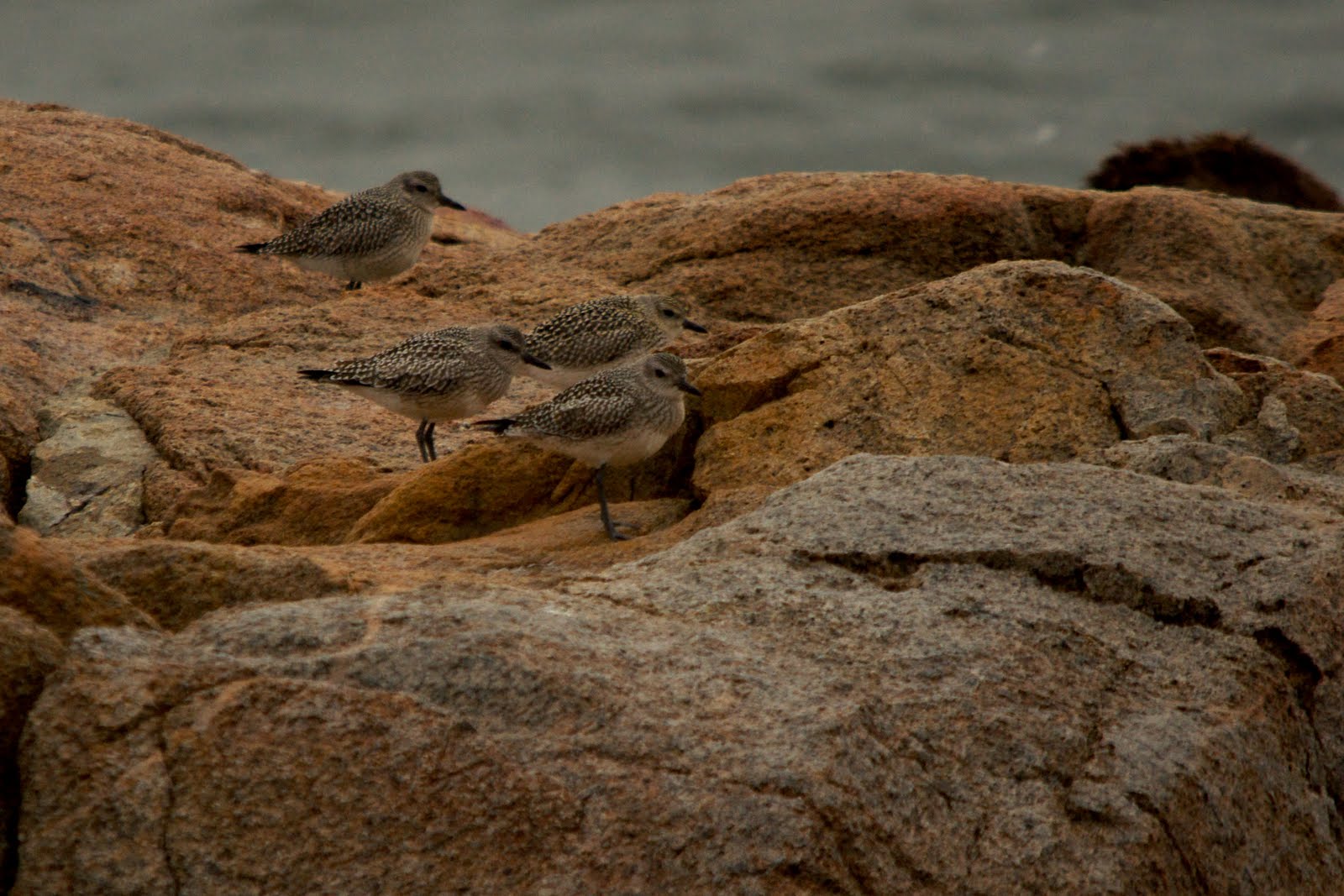
Black-bellied Plovers

As Lance Armstrong says, “There are no bad days. Some days are just better than others.” Ain’t that the truth?
I was hyped up for this fishing trip to the Atlantic Coast. I had (make that have) boxes of hand-tied flies of my own design, my new hand-built rod for saltwater fishing and more ways to figure tidal movement than the U.S. Navy. Of course, the one thing no one can control is the weather. When I got up this morning to fish the incoming tide, the storm that had started the night before still raged. Winds were a steady 35 knots with gusts beyond belief. And rain. Fly fishing would be confined to magazine pages this day.
Well, with gourmet coffee, a good book and the love of my life beside me, I settled into a pleasant morning. Then we noticed movement in the granite boulders 100 feet in front of us. A flock of migrating Black-bellied Plovers had taken refuge in the nooks and crannies of the rocks. Braving the elements (which is a bit of an overstatement) I captured an image of these birds whose mental state best reflected my own, except that I had coffee.
And when I was about to head back for the house, a flock of 50 Common Eiders passed by. No shelter necessary for these huge sea ducks. Storm? What storm? Bring it!


Common Eiders

Wednesday, September 15, 2010

So, Where’s the Answer?


Two related, yet not related, stories popped up in my local papers today. The theme of both is the same; harnessing the wind to produce electricity. One is a story about big money, the other about not so big money. One is about pumping money into the pockets of people we’ll never know—for who knows how long. The other, about pumping electricity back into the grid—now—on a manageable budget.
First, about the fat cats who need lots of food. According to a story in this morning’s Cleveland Plain Dealer, a new industry is about to launch here. The Lake Erie Energy Development Corp., was formed a year ago to seek developers for a wind turbine project off the shores of Cleveland. Today, they announced three major players have been signed up, headed by the Bechtel Development Company of San Francisco. These are the same folks that brought us Hoover Dam, the Chunnel and thousands of other major projects. They, and their partners, will build five turbines for a demonstration project, seven miles off shore at an estimated cost of $100 million.
Stay tuned. The above story will take a while to develop. The other story is about what’s happening now. That story appeared in my local paper, The News Leader, here in Sagamore HIlls. It’s about a local dentist who has installed two vertical wind turbines at his office to generate electricity, at a cost of about $15,000 for each. I saw these turbines a day or so after they were installed and first thought they were art work.


The 30-foot-tall vertical axis turbines will produce about 2,500 kilowatt hours per year in an average 12 mph wind. This equates to around a quarter of the average energy needs of a residential home.
According to the news story, Dr. Davidson figures that wind generated electricity will cover about 10 percent of his energy needs. But here’s the cool part, Ohio, like many states, has what’s called net metering. That means, if you are producing enough energy to reverse your meter, the energy companies credit your account. You’re essentially selling electricity back to the company when you’re on vacation, for example. Bundle that with a federal 30% tax credit and state rebate incentives and you recoup the cost of your wind turbine in about five years, according to IC Green Energy, Vermilion, Ohio, the producer of these vertical axis turbines (wwwicgreenenergyofohio.com). The company can install a complete system in five or six hours.
I know, not everyone can have a 30-foot-tall wind turbine in their front yard. Many people can, however, and they can also be pumping electricity back into the grid for the rest of us.
So what’s the answer? On one hand, we have a mega-cost project that will bring mega-watts of power, and hopefully mega-jobs to our area. On the other, we have a family-owned business, already producing machines that can help the average home owner cut energy costs—and with a good looking machine at that. As Bob Dylan pointed out nearly 50 years ago, the answer, my friends, to this and so many other problems, is blowin’ in the wind.

Monday, September 13, 2010

A Long Way to Flutter By


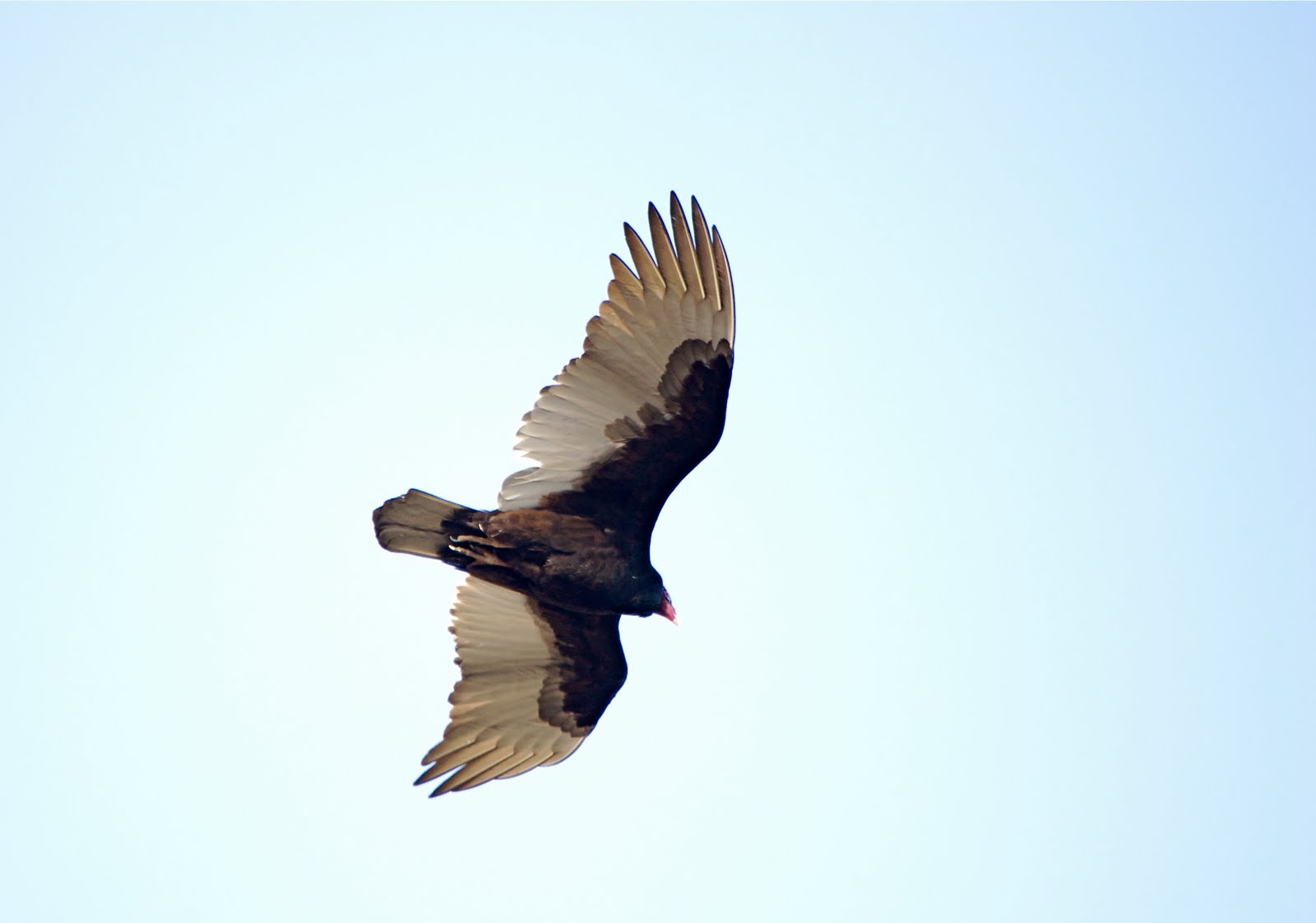
Monarch Butterflies pause during their 3,000 mile migration

When you find yourself running low on energy; or maybe lost without a map, consider the Monarch butterfly, please.
Susan and I made the hour-long trip to Mentor Headlands State Park along Lake Erie’s shores this morning to bird the fall warbler migration. Along with the birds, we found ourselves in the midst of a massive Monarch butterfly movement as the insects moved from northern territories—by the thousands!—to their wintering grounds in the Transvolcanic Plateau region of Mexico. Depending on how you measure it, many of these half-gram insects will travel nearly 3,000 miles before they hibernate.
When you start reading about these butterflies you bump into all kinds of words you might not otherwise associate with light-weight insects. “Hibernate in caves,” for example. That’s what they do. Like bears and other hibernators (chipmunks and groundhogs come to mind) they slow their heartbeat and take a nap—like some of my retired friends.
The principal tree they like in Mexico is the Oyamel fir. We’ve been fortunate to see the hibernating Monarchs in this country near Santa Barbara, California, when they over winter in the Eucalyptus trees near Goleta.
Here, in northeast Ohio, we’re fortunate to see the bulk of migrating Monarchs from the eastern part of this country, and Canada, pass right through. Most of the insects move east of the Great Lakes then turn a southwesterly direction. When we get strong winds from the north, as we’ve had the past few days, the butterflies flutter by in prodigious numbers.
Today, thousands of them rested on trees throughout the park. I thought it interesting that of the larger fly catcher species we saw, Great-crested Flycatcher for example, no one was eating Monarchs. It was as if the birds and insects made a pact: We’re all in this migration boat together, so let’s all pull on the oars. Something like that.
It’s been estimated that about 300 million Monarchs head to Mexico for the winter. Theirs is not an easy life. If they don’t get eaten or whacked by a car along the route, there’s all kinds of stormy weather and loss of habitat to deal with once they get to Mexico.
Unlike migrating birds, the Monarchs have never travelled the route they will follow. Previous generations have died off before the journey begins. Many that start are more than three generations away from those that previously made the trip. Since its wintering grounds were discovered in the high mountains of Michoacan State west of Mexico City, scientists have studied how this critter with a tiny brain, migrates out of Mexico in the spring, moves up to its breeding areas where it produces several generations, then migrates back again to an area that the year’s last generation has never been to.
The exact purpose of their migration and their ability to make the trip at all, remains an intriguing subject for scientists studying them today. I don’t understand the mechanics or biology of the Monarchs’ movement, however, I do appreciate its beauty. Seeing them, by the thousands, is a bonus, maybe our reward, for getting out and birding.

Thursday, September 09, 2010

Way Off the Beaten Track

This summer, Susan and I developed a taste for getting off the interstate highways during our travels. Among our discoveries have been Lucas, Kansas, the Grassroots Art Capital of Kansas, with its Garden of Eden and other assorted oddities. But that’s another story. Recently we found ourselves (geographically speaking) in Rabbit Hash, Kentucky. This (really) tiny town is best known for its name and not much else. Well, it is known for having elected a dog as it’s mayor—twice.
Rabbit Hash’s population varies from four to 40 people, depending on how the city boundaries are drawn. There are a couple of antique stores and two, and I use the term loosely, cafes. The most intriguing store is the General Store (where one of the dog-mayors was banned from entering by the health department). Because of flooding (the town is literally on the banks of the Ohio River) there’s not an unwarped board in the building. I think there is probably one example of everything ever built in the world jammed into that building. There’s so much stuff, floor to ceiling, that there’s no room for anything. The nostalgic aroma of sandalwood incense permeates the place, a feature I’m sure, missing when the first settlers washed up on this south bank of the river in the mid-1700s.
What piqued my curiosity was that, without spending a penny, we had a fun hour or so poking around in history—indoors and out. While across the river, in Rising Sun, Indiana, was “anchored” the Grand Victoria riverboat casino. I wondered if the folks on the boat were looking across the river and enjoying their experience as much as we.

Monday, August 23, 2010

Thinking Green at Sunset


A few moments before the green flash, your basic sunset.

One of the many fun things to do in western Michigan at the end of summer, when the fish aren’t biting and birds have yet to start migration in any serious manner, is watch the phenomenal sunsets over Lake Michigan. So it was this evening, our third here. We had sore shoulders from casting to fish that had their own agenda, which did not include us. An occasional Caspian Tern would fly by and we saw two Sanderlings playing tag with the waves. So much for birding highlights.
Watching the sun set is a ritual we always participate in. Even on some cloudy evenings we sit and hope. This was about to be our third spectacular sunset and I was showing off, talking about the elusive “green flash” some people claim to see at sunset. Other than the name, I know little about this atmospheric phenomena.
Ever the optimist, I had a camera at the ready. A friend once told me I was the definition of an optimist: A guy who carries a camera when he goes fishing.
As the sun was dropping below the horizon (I know, that’s technically incorrect), we watched the fire-ball, hard to imagine it’s really 93 million miles away—give or take a few million depending on our orbit. Fully expecting the sun to disappear as it always does, just as the “red” edge sank, it turned green! To its right was a small shaft of green light as well.
Doing a bit of research, I learned this flash of green lasts only 1.4 seconds. Three of the other four people with me also saw it. That’s when I realized I had had the cognizance to keep my finger on the shutter release and blasted away at 4.5 frames per second. Thank you, Mr. Nikon.
There are pages and pages of scientific and not-so-scientific information about green flashes at sunset. Jules Verne's 1882 novel "Le Rayon Vert" (The Green Ray) popularized the green flash as: "A green which no artist could ever obtain on his palette, a green of which neither the varied tints of vegetation nor the shades of the most limpid sea could ever produce the like! If there is a green in Paradise, it cannot be but of this shade, which most surely is the true green of Hope."
Well, I have to add, in this digital age, I was unable to manipulate the color in the photos I took to match what we actually saw. Once again, Jules Verne was right.
If you want to learn more about the green flash, caused by the same atmospheric refraction and scattering effects which produce the red sunset, a good place to start is http://hyperphysics.phy-astr.gsu.edu/hbase/atmos/redsun.html.
In uniform air, the dispersion of light rays is apparently so small that the separation of red and green images is not visible. It takes more unusual layering of the atmosphere to enhance the separation.
If you have an appetite for more information about green flashes, “An introduction to Green Flashes,” by Andrew T. Young, http://mintaka.sdsu.edu/GF/index.html, will give you more than you can digest in a single setting.
As Young explains, “Green flashes are real (not illusory) phenomena seen at sunrise and sunset, when some part of the Sun suddenly changes color (at sunset, from red or orange to green or blue). The word “flash” refers to the sudden appearance and brief duration of this green color, which usually lasts only a second or two at moderate latitudes. As the area that turns green is ordinarily near the limit of the eye's resolution, these are sometimes called “green dot” displays. Green flashes are by-products of the large variations in astronomical refraction near the horizon.”
And from Elton John’s, “Rocket Man,” let me steal the line, “And all this science I don’t understand.” You don’t have to understand to be amazed and enjoy.


The elusive green flash and a green “pillar” to the right.

Wednesday, July 28, 2010

Don’t Take Fishing Personally


Some days they wait in line to get caught


Fishing was not on the agenda this week. I had a full plate of other tasks. Susan is off having some quality time with her mom and I had … Well, I had (have) a lot to do. Then Tom called Sunday night and said he thought we needed some time on the stream—how about Tuesday. The heat had tapered off, the fish were probably active again, the stars were aligned, etc.
For almost 10 seconds I was tempted to say no. Then I rethought my position. I do have two fishing trips planned for August and another in September. It had been a couple months since the rods were out of the cabinet, however. Maybe I did need some practice. Hey, fishing is serious business. There are thousands of mistakes to be made on the human’s part while the fish has only to make one. Fish definitely have the upper fin in this game.
Loaded with enough tackle to open a small fly shop, Tom and I, along with new-found-friend Greg, headed off to one of our favorite streams. While distracted by birds and going through the ritual of stringing up the rods, that other ritual, choosing a fly pattern, surfaced. For me, I said, it’s easy. I’m just going to pick up where I left off the last time we were here. My theory was that the fish did not get any smarter during the intervening couple of months, and, hopefully, I did not get any dumber. Tom, brow furrowed, was changing and stretching leaders, looking at some if his beautifully tied flies, and deep into making the right choice. Greg, the only one of this trio with a job, was grinning. He was just happy not to be in the office or his car heading for a meeting on this morning when the sky seemed an unnatural shade of blue.
One of those great mysteries of fly fishing, and probably why we keep coming back, is how two fishers can be virtually side by side, using the same pattern, one catching fish and the other not.
And so it was to be. On this day I was the lucky one. Tom, who has out-fished me numerous times, could only become more flustered each time he watched me dance a rainbow or brookie around the pool. When I’d complain about a fly I had tied coming apart from all the abuse by the fish, he'd mutter something like, “Just keep it up, Bubb. It’s a long walk home.” I tried not to laugh. Honest, I did. And when he did get a fish into the net, he’d lecture it, suggesting that it was about time, etc.
Some days you’re the fisher. Some days you’re the bait.


Pretty, but too small.